
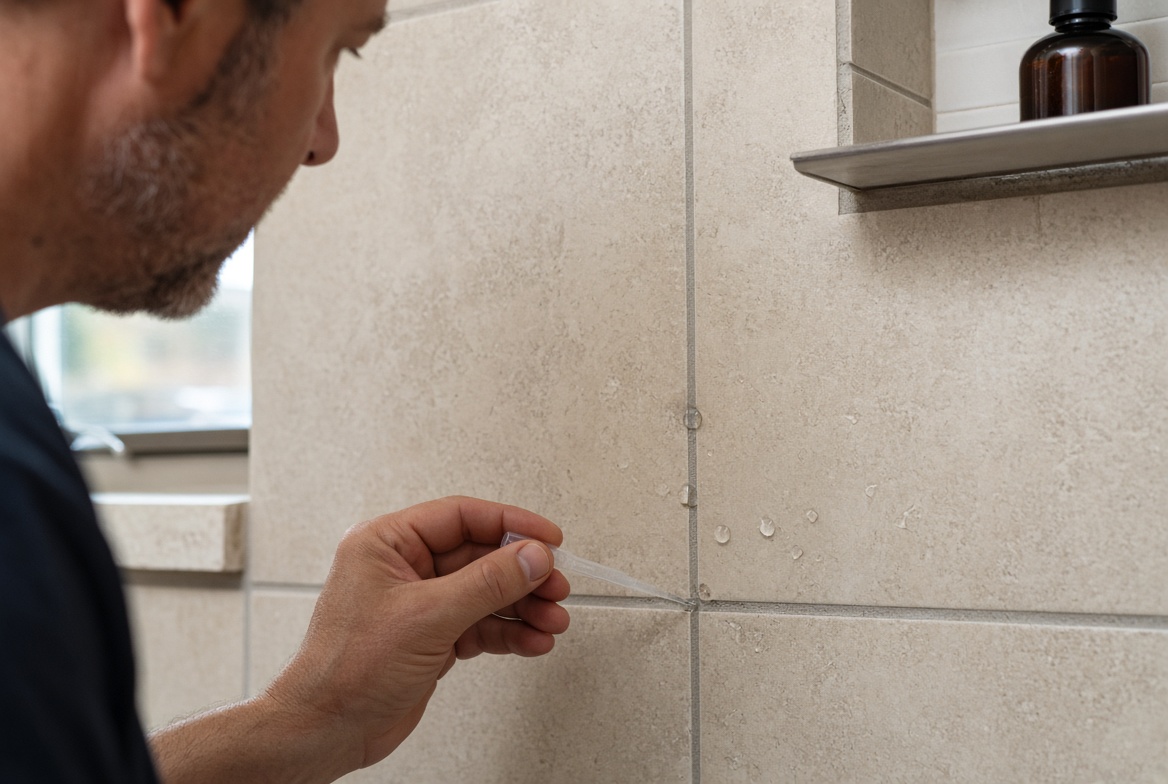

How often to seal grout depends on the room, the sealer and how the floor is cleaned, not on a fixed date. A simple water test tells you more than any calendar: if a few drops darken the grout instead of beading on top, the protection has worn and it is time to reseal. In most Arizona homes, the grout that needs attention first is in the shower, the kitchen work zone and the path in from the garage.
This guide explains what grout sealer does, how long it lasts in different rooms, how to check it yourself, and why cleaning always comes before sealing. If you would rather have someone look at the floor first, our tile and grout cleaning service starts by inspecting the tile and the condition of the grout before anything is applied.
What Grout Sealer Does (and What It Does Not)
Grout is porous. Left unprotected, it soaks up spilled coffee, cooking oil, mop water and the fine dust that blows in during monsoon season. A clear penetrating sealer soaks down into those pores and lines them, so liquids bead on the surface where they can be wiped away instead of being absorbed.
A penetrating sealer does not change the color of the grout, and it does not form a hard shell on top. It also does not stop dirt from landing on the floor. Sealed grout still needs cleaning; it simply releases soil more easily and stays clean longer between professional visits.
How Often to Seal Grout, Room by Room
Sealer wears where the floor works hardest. That is why we offer different sealing options depending on the room: a heavily used shower or the main walkway from the garage may call for a more robust sealer, while a formal dining room or a guest bath needs far less.
- Showers and tub surrounds: daily water, soap and shampoo wear sealer faster than anywhere else in the house. Check these first and most often.
- Kitchens: the area in front of the sink, stove and dishwasher sees spills and frequent mopping. Grout here often wears unevenly, so test the busy zone, not the corner by the pantry.
- Entries and the garage door path: desert grit acts like sandpaper under shoes and paws. These paths usually darken before the rest of the floor.
- Low-traffic rooms: formal living areas, guest rooms and casitas can go much longer between sealings.
- Patios: sun, heat and blowing dust are hard on outdoor grout. Test patio grout separately from indoor floors.
How Long Does Grout Sealer Last?
There is no single answer, and anyone who gives you a fixed number without seeing the floor is guessing. How long grout sealer lasts depends on three things:
- The product. Sealers differ in how deeply they penetrate and how much wear they tolerate. Follow the maker’s guidance for the product that was used.
- The traffic and moisture. A shower used twice a day and a hallway used once a week will never wear at the same rate.
- The way the floor is cleaned. Harsh acidic or bleach-based cleaners break sealer down early. Steam mops and abrasive pads can do the same.
That is why the water test matters more than the date on the calendar. Two rooms sealed on the same day may need very different follow-up.
The 60-Second Water Test
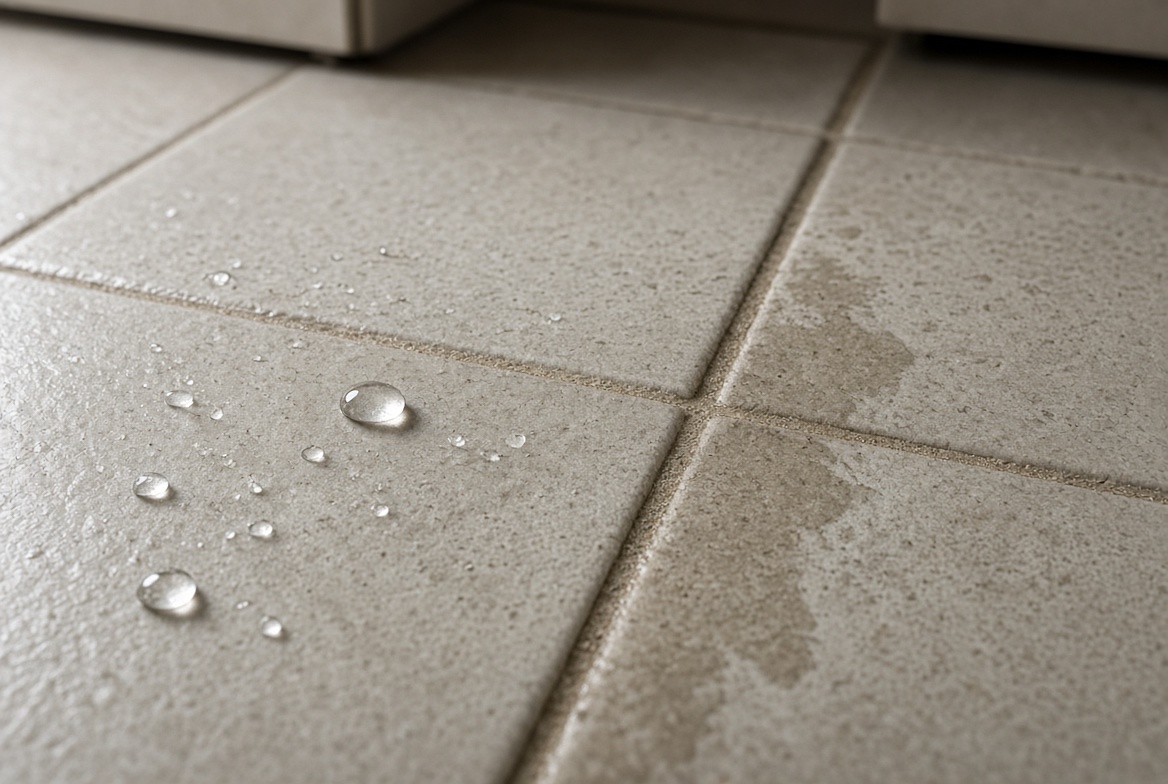
You can check your grout yourself in a minute:
- Pick a clean, dry grout line in a busy area, such as in front of the kitchen sink or inside the shower.
- Put a few drops of water on the joint.
- Wait about a minute and watch.
If the water beads and sits on top, the sealer is still doing its job. If the grout darkens as the water soaks in, the protection has worn in that spot. Repeat the test in a low-traffic room; it is common to find that only the busiest areas need attention.
Signs It Is Time to Reseal Your Grout
- Water darkens the grout during the water test.
- Traffic paths look two shades darker than the grout along the walls.
- Shower grout stays damp-looking long after the rest of the enclosure has dried.
- Spills leave a mark in the joint even when you wipe them up quickly.
- Mopping no longer brightens the grout the way it used to.
Always Clean Before You Seal
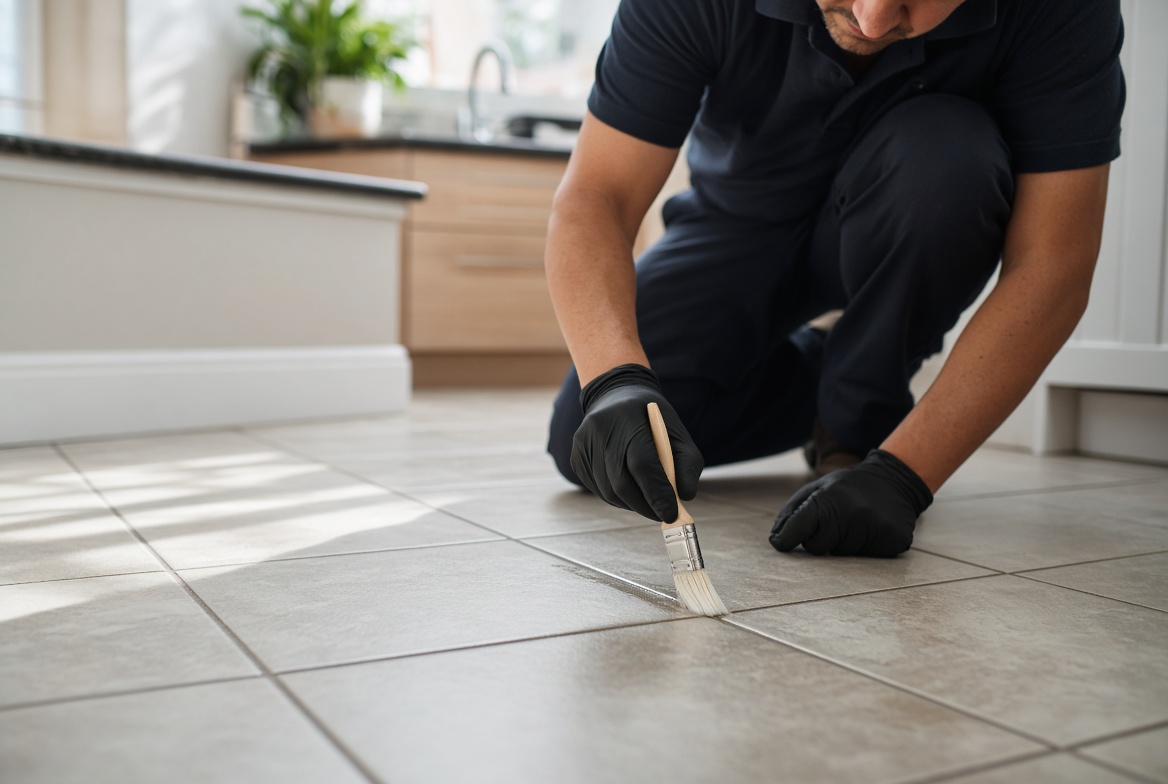
Sealing over dirty grout locks the dirt in. Household brushes and spray cleaners lift the surface layer but leave soil deep in the pores, and in the Valley that soil is a specific mix: fine desert dust, cooking oil and the mineral film that hard water leaves in bathrooms.
A professional clean pre-treats the joints and then flushes the loosened soil out with extraction equipment, which often brings back the grout’s original shade. Only then does sealing make sense. You can see how that process works in a specific area on our page about residential tile and grout cleaning in Scottsdale, where many homes have large areas of light grout that show every bit of tracked-in dust.
Natural stone deserves a separate note. Stone tile reacts to chemicals that ceramic and porcelain shrug off, which is one reason every visit begins with identifying the tile type and using stone-safe products where they are needed.
Make Your Grout Sealer Last Longer
- Dry-sweep or vacuum before you mop, so you are not pushing grit into the joints.
- Use a pH-neutral cleaner instead of vinegar, bleach or other harsh products.
- Squeegee shower walls after use and run the bathroom fan.
- Put mats at exterior doors and the garage entry to catch desert dust.
- Wipe up spills promptly, especially oil, wine and coffee.
Our post on why regular grout cleaning protects your floors covers the day-to-day side in more detail.
Frequently Asked Questions
How often should you seal grout in a shower?
Showers wear sealer faster than any other room because of daily water and soap. Do the water test every few months, and reseal when water starts to darken the joints instead of beading.
Does new grout need to be sealed?
New grout is just as porous as old grout. Once it has fully cured, a penetrating sealer helps keep it from absorbing spills and soil. Many builder installations are never sealed at all, so it is worth testing even in a newer home.
Can I seal grout that is already dirty?
It is not a good idea. Sealer traps whatever is in the pores, so dirty grout stays dirty, just protected. Clean the grout thoroughly first, let it dry completely, then seal.
Are the products you use safe around kids and pets?
We use eco-friendly, non-toxic cleaning products chosen to be safe for children and pets. Most floors are dry within a few hours, though humidity and airflow make a difference.
Does sealed grout still need professional cleaning?
Yes. Sealer slows absorption, but dust and grime still build up over time. Periodic professional cleaning, followed by resealing where the water test shows wear, keeps grout looking its best.
Get Your Grout Cleaned and Sealed
If the water test shows your grout has lost its protection, start with a proper clean. Barefoot Clean Floors cleans tile and grout in kitchens, bathrooms, entries and patios across the Valley, then applies a sealer chosen for each room so the result lasts. Call (602) 603-4781 or request a quote.
References
- Tile Council of North America: industry guidance on tile installation and care.
