


When living in the Sonoran Desert, fine particulate matter from haboobs and high winds inevitably finds its way indoors. If you are experiencing persistent indoor allergies, rapid dust accumulation on hard surfaces, a distinct crunchy texture underfoot, traffic lane discoloration, or an earthy odor during monsoon season, your carpet is actively trapping Phoenix desert dust.
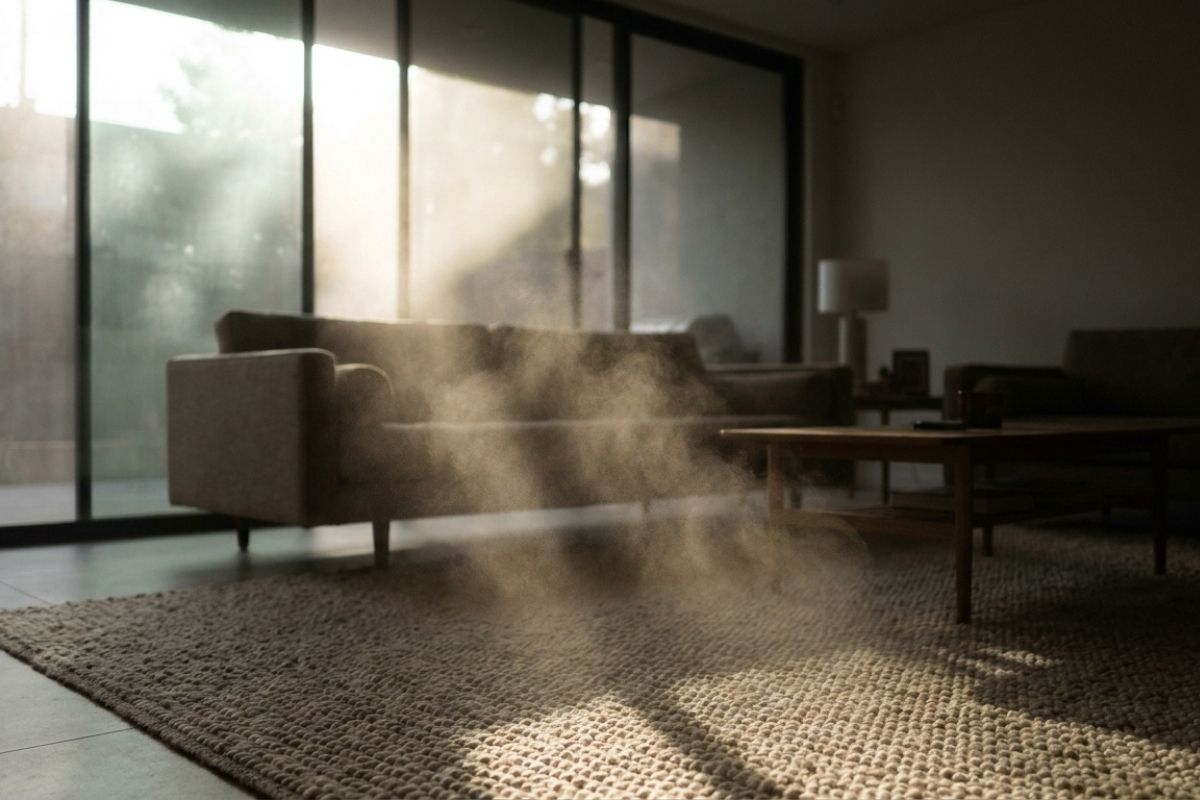
Because modern synthetic fibers act as a massive structural filter, they can safely hold a certain amount of fine silica and particulate matter. However, once this structural filter reaches saturation, standard vacuuming isn’t enough, making professional Steam Carpet Cleaning Phoenix essential to clear the buildup. Left unaddressed, walking across the room creates a “bellows effect,” forcefully launching microscopic particles back into the breathing zone.
Key Takeaways
- The Bellows Effect: Saturated flooring releases fine particulate matter (PM10 and PM2.5) back into the air with every step.
- Mechanical Wear: Desert sand contains sharp silica particles that physically cut and fray synthetic fibers.
- Alkaline Bonding: Arizona soil has a high pH, causing it to bond stubbornly to traffic lanes.
- Rapid Resettling: Dusting furniture only to see it covered again within 24 hours is a primary indicator of saturated flooring.
- Hidden Health Risks: Unextracted soil can harbor allergens, volatile organic compounds, and microbial spores common to the Southwest.
The Unique Composition of Sonoran Desert Particulates
To understand why homes in the Valley of the Sun require specific maintenance strategies in 2026, it is essential to analyze the exact composition of the local soil. Unlike standard household lint or organic dirt found in temperate climates, the soil in Maricopa County is highly specialized. It consists primarily of eroded silicates, caliche (calcium carbonate), and microscopic organic debris.
According to data maintained by the Environmental Protection Agency (EPA), arid regions frequently struggle with elevated levels of PM10—particulate matter that is 10 micrometers or smaller in diameter. Because these particles are so lightweight, standard weather patterns and severe dust storms can suspend them in the atmosphere for days. When this fine silt enters a home through HVAC systems, poorly sealed windows, or regular foot traffic, it eventually settles into the lowest point of the room: your floors.
Research from the Centers for Disease Control and Prevention (CDC) notes that arid Southwestern soil can also harbor Coccidioides spores, the fungus responsible for Valley Fever. While indoor transmission is highly contingent on severe outdoor exposure, maintaining a clean indoor environment is a heavily recommended preventative measure. When your home’s flooring reaches maximum capacity, it transitions from being a helpful secondary air filter to becoming the primary source of indoor air contamination.
Sign 1: Unexplained Respiratory Symptoms and Allergies
The most immediate and concerning indicator that your flooring is saturated with fine particulate matter is a decline in indoor air quality, directly manifesting as respiratory irritation. If occupants consistently experience sneezing, coughing, itchy eyes, or congestion that magically improves when they leave the house, the indoor environment is compromised.
The American Lung Association states clearly:
“Poor indoor air quality can cause or contribute to the development of infections, lung cancer and chronic lung diseases such as asthma.”
When microscopic dust is trapped deep within the backing of a plush floor covering, simple airflow from an overhead fan or an air conditioning vent is enough to disturb it. However, the most significant disruption comes from foot traffic. Walking across a saturated room forces the fibers to compress and rapidly expand, pushing PM2.5 and PM10 particles into the breathing zone. If you notice a spike in allergy symptoms, particularly right after vacuuming with a standard, non-HEPA machine, it is one of the essential signs your carpets indicate a need for deep cleaning.
Sign 2: The “Crunch Test” Reveals Hidden Particulates
Standard household lint is soft. Arizona desert soil is not. Due to the high concentration of quartz and silica in Sonoran soil, the particulates are essentially microscopic shards of glass.
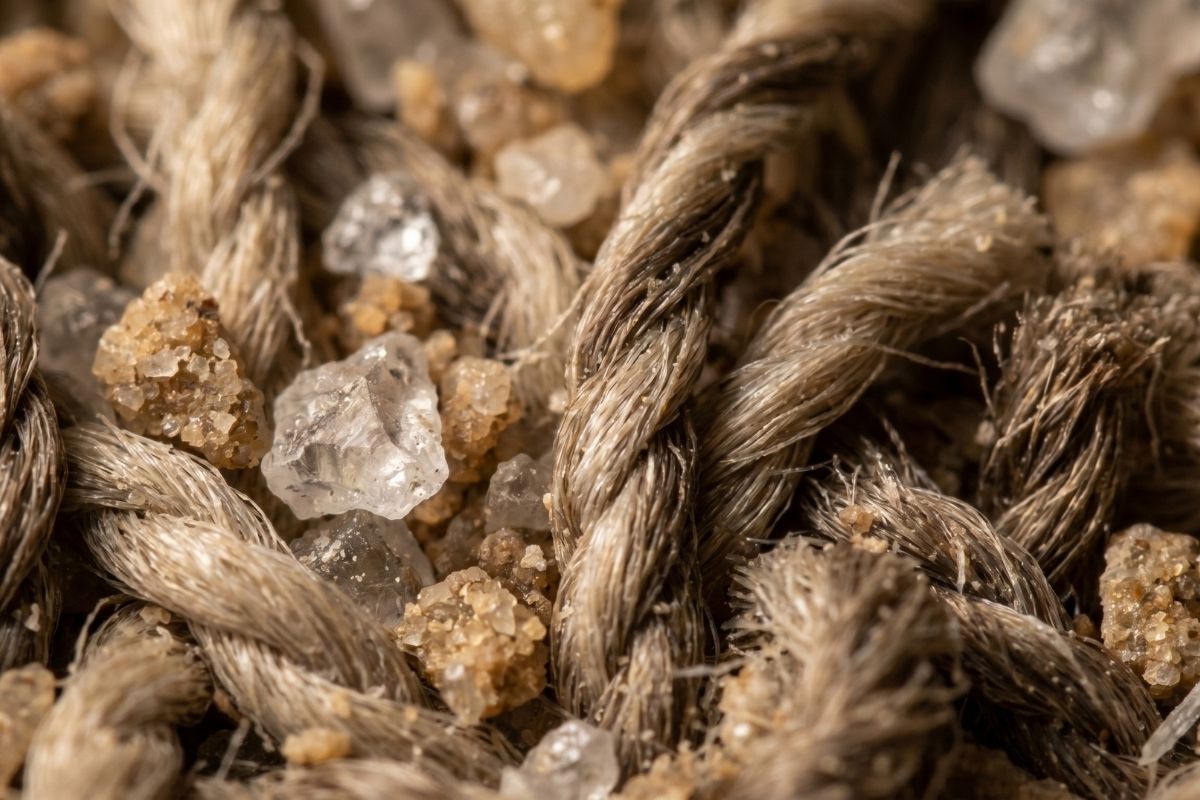
When these jagged particles work their way past the surface fibers and settle near the primary backing, they become difficult to extract. As you walk barefoot across the room, you may feel a faint gritty or crunchy texture. This is a severe warning sign. Every time you step on these silica particles, they grind against the synthetic yarns—such as nylon, polyester, or olefin.
Over time, this mechanical abrasion causes the yarn to fray. The frayed fibers lose their structural integrity, permanently untwist, and stop reflecting light evenly, creating a dull, lifeless appearance that no amount of washing can restore. Industry standards dictate that a heavily soiled flooring system can hold up to one pound of dry particulate matter per square yard before it even begins to look visibly dirty. If you can feel the grit, the mechanical damage is already occurring.
Sign 3: Rapid Dust Accumulation on Hard Surfaces
A highly practical way to diagnose airborne resuspension in your home is to observe your hard surfaces. If you thoroughly wipe down your coffee tables, television screens, and bookshelves, only to find a noticeable layer of fine, tan-colored film resettling within 24 to 48 hours, the source is likely beneath your feet.
In homes with hard flooring like tile or hardwood, settling particles remain on the surface where they are easily swept away. In homes with woven floor coverings, the fibers hide the accumulation. However, because the flooring cannot hold infinite amounts of debris, it eventually reaches a point of total saturation. Once saturated, normal household activities eject the excess particulate matter into the air. This airborne matter floats for several hours before landing on elevated hard surfaces.
Implementing regular maintenance is crucial not just for the floors, but for the entire home’s ecosystem. This is exactly why regular furniture cleaning improves indoor air quality, as upholstered surfaces and floors act in tandem to manage airborne particulate loads.
Sign 4: Persistent Traffic Lane Discoloration
Have you noticed that the main walkways in your home—hallways, the path from the front door to the kitchen, or the area in front of the sofa—look darker or more yellowed than the corners of the room? While some of this is due to normal fiber crushing, much of it is chemical.
Arizona soil is highly alkaline, frequently registering a pH of 8.0 or higher due to high concentrations of calcium carbonate. When this alkaline soil mixes with natural body oils from bare feet, cooking greases, or minute amounts of moisture from humidifiers, it forms a sticky, cement-like bond with the carpet fibers.
This bound soil resists standard dry vacuuming. Even worse, the alkaline nature of the dirt can interact with the chemical dyes in the fibers, leading to long-term color degradation. Understanding the local soil chemistry is one of the key steps in debunking the 5 carpet myths you should stop believing in Phoenix, primarily the myth that all dirt can be removed with a standard upright vacuum.
Sign 5: Distinct “Earthy” Odors During Monsoon Season
The smell of rain in the desert, known as petrichor, is beloved by locals. It is largely created by a chemical compound called geosmin, which is produced by soil-dwelling bacteria known as Streptomyces, alongside oils secreted by creosote bushes.
During the dry months, these compounds lay dormant in the fine dust that blows into your home and settles into your floors. When the North American Monsoon arrives in late summer, the relative humidity in the Valley can temporarily spike. The sudden influx of atmospheric moisture permeates the home, rehydrating the dormant bacterial compounds and soil trapped in the flooring.
If your living room suddenly smells musty, damp, or intensely “earthy” on a humid day, the fibers are off-gassing these volatile organic compounds. To completely eliminate carpet odors naturally in Phoenix, you must physically remove the biological source material, not just mask it with artificial fragrances.
How Desert Dust Compares to Standard Household Dirt
To fully grasp the remediation requirements, we must compare the local environmental particulate load against what is considered “normal” household soil.
| Characteristic | Standard Household Soil | Phoenix Desert Dust |
|---|---|---|
| Primary Composition | Dead skin cells, pet dander, clothing lint. | Silica sand, caliche, heavy PM10 particulate matter. |
| Texture | Soft, light, easily airborne. | Sharp, jagged, abrasive underfoot. |
| pH Level | Neutral (around 7.0). | Highly Alkaline (8.0 – 8.5). |
| Damage Mechanism | Dulls appearance through oil binding. | Mechanically cuts, scratches, and frays synthetic fibers. |
Step-by-Step: How to Test Your Flooring for Dust Saturation
If you suspect your home is suffering from a high particulate load, you can perform a simple diagnostic test to confirm the presence of deep-seated soil without specialized equipment.
- Isolate a High-Traffic Area: Choose a spot that receives heavy daily use, such as a main hallway or the center of the living room.
- The Slap Test: Wait for a sunny afternoon when natural light is streaming through the nearest window. Get close to the floor and firmly slap the surface of the carpet with the flat palm of your hand.
- Observe the Plume: Look closely at the air directly above where you struck the floor, using the sunlight to illuminate the particles. If a visible cloud of fine, tan dust rises into the air, the primary backing is saturated.
- The Parting Test: Kneel down and use your fingers to part the tufts of yarn all the way to the woven backing. Inspect the base of the fibers.
- Identify the Grit: If you see a buildup of fine sand or dark soil clustered at the base, standard maintenance is no longer sufficient.
Why Standard Vacuuming Isn’t Enough for Arizona Homes
According to the Maricopa County Air Quality Department, continuous mitigation of airborne dust is critical for public health. However, relying solely on standard domestic vacuums can sometimes exacerbate the problem.
Most residential vacuums lack true sealed HEPA (High-Efficiency Particulate Air) filtration. By Department of Energy standards, a true HEPA filter must trap 99.97% of particles down to 0.3 microns. If your vacuum uses inferior filtration, the motor creates powerful suction to pull the soil out of the floor, but then exhausts the microscopic PM2.5 and PM10 particles right back into the indoor atmosphere. You are essentially just relocating the dust from the floor to the air.
Furthermore, dry vacuuming only removes loose particulate matter. It does absolutely nothing to break the alkaline chemical bond holding the caliche and oxidized oils to the traffic lanes. To understand the physics behind this limitation, one must review the science behind deep cleaning and why vacuuming isn’t enough.
Professional Remediation Strategies for 2026
Resolving severe desert soil saturation requires professional intervention. The industry gold standard for restorative care is Hot Water Extraction (HWE), commonly referred to as steam cleaning.
The process begins with a specialized pre-conditioning agent. Because Arizona soil is alkaline, professionals often use a scientifically formulated, pH-balancing pre-spray to neutralize the calcium carbonate bonds. Once the soil is chemically loosened, pressurized hot water (often exceeding 200°F) is injected into the pile, while a heavy-duty, truck-mounted vacuum system simultaneously extracts the water, the suspended silica, and the biological contaminants.
Frequency Recommendations
If you are wondering how often you should clean your carpets in Arizona’s dry climate, the answer depends heavily on your household. For homes with pets, severe allergy sufferers, or open windows during windy days, professional extraction is recommended every 6 to 9 months. For standard households with excellent HVAC filtration, every 12 to 18 months is sufficient to prevent irreversible fiber damage.
Conclusion
Living in the breathtaking scenery of the Southwest comes with unique home maintenance challenges. When high winds and arid conditions drive fine silica and particulate matter indoors, your floor coverings bear the brunt of the assault. By recognizing the critical signs—respiratory irritation, a crunchy texture underfoot, rapid resettling of dust, discolored traffic lanes, and monsoon-triggered odors—you can take proactive steps to protect both your property and your indoor air quality.
Don’t let abrasive desert soil destroy your investment and compromise the health of your family. If you recognize these symptoms in your home, professional extraction is the only way to reset your indoor environment. Contact us today to schedule a comprehensive evaluation and deep cleaning of your flooring surfaces.
Frequently Asked Questions
Why does my house get so dusty so fast in Phoenix?
Phoenix is situated in an arid desert basin prone to high winds and haboobs. Microscopic soil particles (PM10) easily infiltrate homes through microscopic cracks, HVAC systems, and foot traffic, settling onto surfaces rapidly.
Can a dirty carpet really make me sick?
Yes. Saturated fibers harbor allergens, bacteria, and fine particulate matter. When disturbed, these contaminants become airborne, causing respiratory irritation, asthma flare-ups, and allergic reactions.
Will vacuuming more often fix the problem?
While frequent vacuuming with a sealed HEPA vacuum helps manage loose topsoil, it cannot remove the heavy, alkaline desert sand deeply embedded at the base of the fibers. Professional extraction is required for deep soil.
What is the “crunch test” for carpets?
The crunch test refers to walking barefoot over the floor and feeling a gritty, abrasive texture. This indicates a heavy accumulation of sharp silica sand that is physically cutting the synthetic yarns.
How do haboobs affect my indoor air quality?
Haboobs generate massive walls of dust that force fine silt into the smallest crevices of a home. After a dust storm, indoor particulate levels spike drastically, often settling into woven fabrics and flooring.
Why does my living room smell earthy when it rains?
Desert soil contains bacteria that produce geosmin. When monsoon humidity rises, the moisture interacts with the dormant dust trapped in your flooring, releasing a strong, earthy off-gassing odor.
References
- Environmental Protection Agency (EPA) – Indoor Air Quality and Particulate Matter (PM10 and PM2.5). https://www.epa.gov
- Centers for Disease Control and Prevention (CDC) – Coccidioidomycosis (Valley Fever) Data and Fungal Ecology. https://www.cdc.gov
- American Lung Association – Health Effects of Indoor Air Pollution and Airborne Particulates. https://www.lung.org
- Maricopa County Air Quality Department – Dust Control and Public Health Initiatives. https://www.maricopa.gov
