
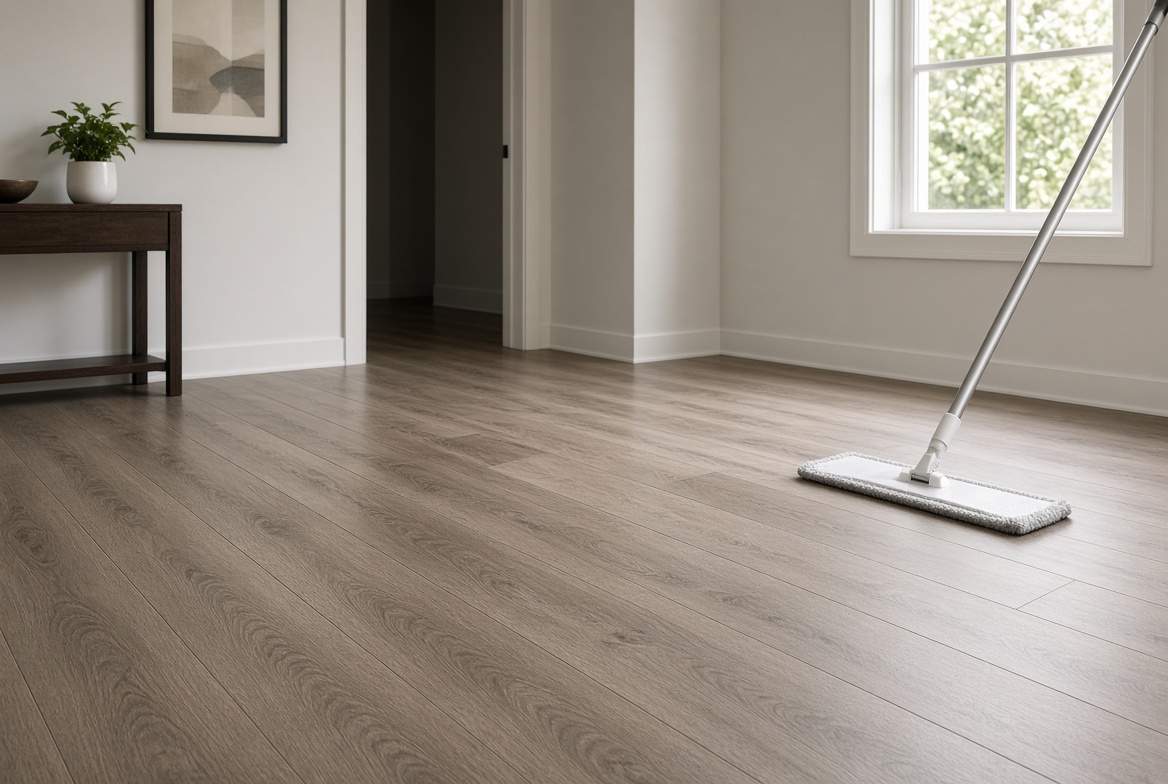

To clean luxury vinyl plank, remove grit with a soft broom or a vacuum on the hard-floor setting, then damp-mop with a pH-neutral cleaner diluted as directed and let the floor dry with no standing water. That covers how to clean luxury vinyl plank floors for most homes; the details below deal with haze, stuck-on messes and the products that cause problems.
Luxury vinyl plank, often shortened to LVP, is popular in Valley homes because it copes well with kids, dogs and spills. People sometimes hear “waterproof” and assume it needs no care. The top wear layer can still scratch and dull, and the wrong product leaves a film that grabs dust. A good routine takes little time and needs very little equipment.
How to Clean Luxury Vinyl Plank Floors Step by Step
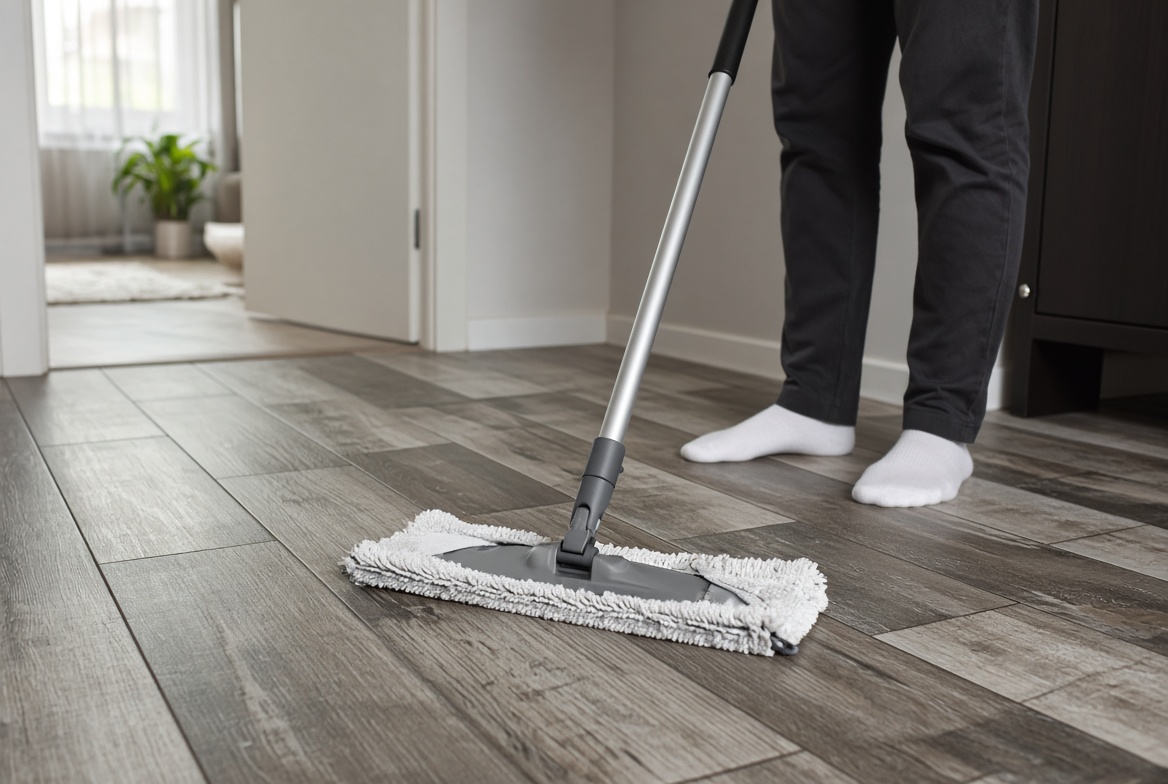
- Dry clean first. Use a soft-bristle broom, a dry microfiber pad or a vacuum with the beater bar switched off. Dragging grit around under a wet mop is how fine scratches begin.
- Mix the cleaner correctly. Follow the dilution on the bottle. More cleaner does not mean cleaner floors; it means more residue.
- Wring out the mop. A microfiber flat mop should be damp, not dripping. Change or rinse the pad when it looks gray.
- Move with the planks. Mopping along the length of the boards shows fewer streaks.
- Finish dry if the water is hard. In much of the Valley, tap water leaves spots as it evaporates. A quick pass with a dry microfiber pad removes them.
In most households, dry cleaning a few times a week and mopping once a week will be enough. Entries, kitchens and any room where a dog comes in from the yard may need more.
What to Avoid on Vinyl Plank
Check your product’s care guide, since makers differ, but these are the usual trouble spots:
- Steam mops: heat and moisture can work into click-lock seams and affect the adhesive layers in some products.
- Wax, oil soaps and “shine” products: vinyl does not absorb them, so they sit on top as a sticky film.
- Bleach, ammonia and harsh solvents: these can dull or discolor the wear layer.
- Abrasive pads and powders: they leave fine scratches that collect dirt.
- Rubber-backed mats: some rubber backings can react with vinyl and leave yellow stains. Look for mats labeled safe for vinyl.
- Beater-bar vacuums: spinning bristles can scuff the surface and throw grit around.
Why Your LVP Looks Hazy or Streaky
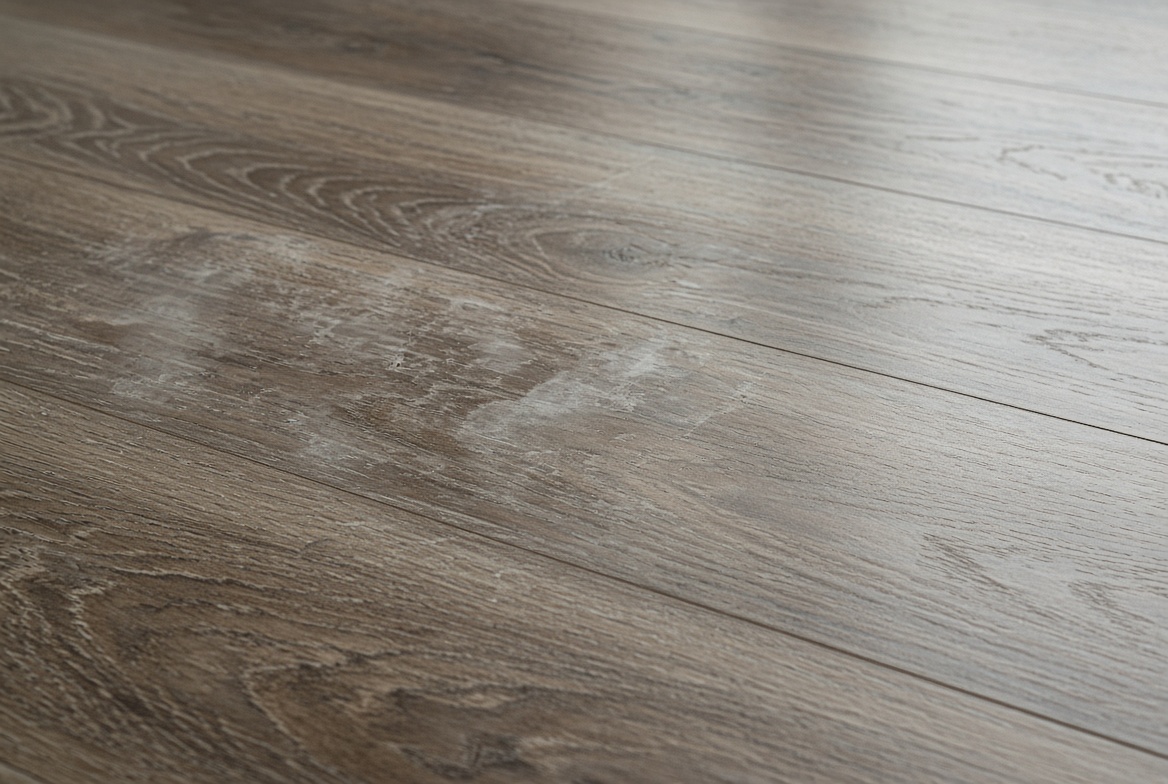 Haze is among the most common complaints from LVP owners, and it is rarely a defect in the floor. There are three common causes.
Product buildup. Repeated use of all-in-one cleaners, polish or too much detergent creates a layer that dries cloudy. Footprints show up almost immediately on that film, and a dull look returns soon after mopping.
Hard water. Minerals left behind when mop water dries look like a white or gray bloom, most visibly in low sunlight. Valley water is hard enough for this to be common here.
Dirty mop water. Reusing a soiled pad simply spreads a thin coat of dirt across the room. Rinsing or switching pads often makes a surprising difference.
To remove a mild film, mop with plain warm water and a clean pad, change the water often, and dry as you go. If the haze remains after that, the buildup is probably thick enough to need a stronger approach, and it is worth having someone look before you try anything aggressive.
Stuck-On Messes and Stains
Treat these by type, and always test a hidden spot first:
- Food and drink: blot right away, then use your pH-neutral cleaner and a soft cloth.
- Gum or wax: harden it with ice in a bag, then lift it with a plastic scraper.
- Scuff marks: rub gently with a soft cloth or a soft white pad. Skip colored scrub pads, which can leave marks of their own.
- Ink or marker: a small amount of isopropyl alcohol on a cloth often lifts it. Wipe with clean water afterward.
- Pet accidents: clean them up quickly. The plank surface usually resists liquid, but urine that gets into seams or along walls can cause odor. An enzymatic product made for hard floors helps.
Arizona Habits That Help LVP Last
Desert grit is the main enemy of the wear layer, so stop it at the door. Use a vinyl-safe mat inside each entry and a rough one outside, and take a pass with a dry pad after a dust storm rather than waiting for mop day.
Sun matters here as well. Strong afternoon light can fade some vinyl over time, and direct heat can stress planks near big west-facing windows and patio doors. Blinds or window film reduce both effects. Put felt pads under chairs and table legs, and lift heavy furniture rather than dragging it. Those small steps are also covered in our article on how to care for floors so they last.
When Professional Vinyl Floor Cleaning Makes Sense
A professional clean helps when grime has settled into embossed texture that a flat mop rides over, when layers of old product have built up, or when you are getting a home ready for sale, guests or new tenants. Grime in textured planks is hard to reach by hand because the pad only touches the high points of the pattern.
Barefoot Clean Floors cleans vinyl along with hardwood, laminate, tile, concrete and carpet. We inspect first, pre-treat stains, and use specialized equipment with controlled moisture chosen for the surface, with most floors dry within a few hours. A protective sealant or polish is only used when the flooring type benefits from it. See floor cleaning services in Phoenix for how we approach homes with mixed floors, or floor cleaning in Queen Creek if you are in the southeast Valley. Businesses with vinyl in lobbies or corridors can look at our commercial floor cleaning page.
Frequently Asked Questions
Can I use vinegar on luxury vinyl plank?
Some people use a very diluted mix, but acid can dull certain wear layers over time and some makers advise against it. A pH-neutral cleaner made for vinyl is the safer everyday choice.
What is the best mop for vinyl plank floors?
A microfiber flat mop works best. It uses little water, picks up fine dust well, and the pad can be rinsed or swapped as it gets dirty.
Is vinyl plank really waterproof?
Many products are water-resistant at the surface, but water can still get into seams or under the floor at the edges. Wipe up spills, and do not leave standing water.
How do I make dull vinyl plank shiny again?
Start by removing residue, since film is often what makes a floor look dull. Avoid adding shine products on top of it. If cleaning does not help, the wear layer itself may be scratched.
Can you clean both my vinyl and my carpet in one visit?
Yes, homes with several floor types are common. Tell us what you have when you call so we can plan the visit and give you a free estimate.
Tired of Fighting Haze?
If your vinyl plank still looks cloudy after you have done everything right, a closer look can usually find the cause. Call Barefoot Clean Floors at (602) 603-4781 or request a free quote. Estimates are transparent, with no hidden fees.
References
- Resilient Floor Covering Institute: trade association for vinyl and other resilient flooring.
