
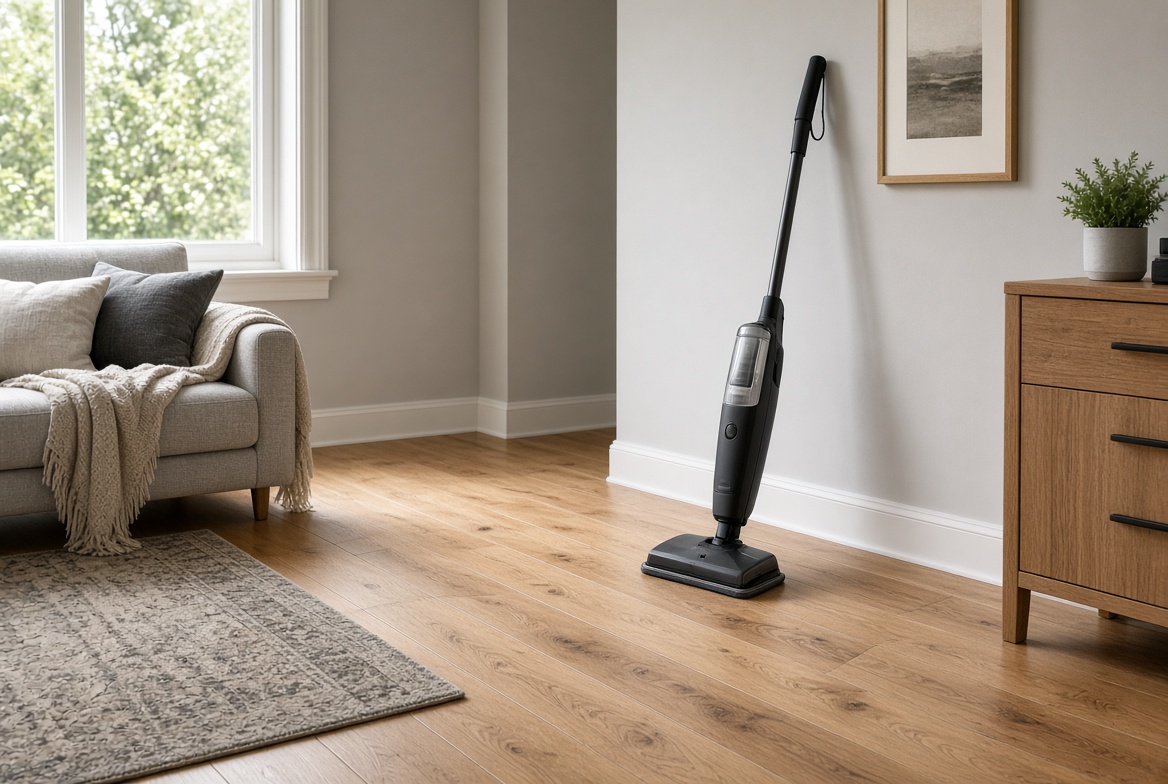

Can you steam clean hardwood floors? In almost every case, no: a steam mop forces hot moisture into seams and through worn spots in the finish, which can cloud the surface and swell the boards. A barely damp microfiber mop and a cleaner made for finished wood will get the floor just as clean without that risk.
Steam mops are sold as a chemical-free way to clean nearly anything, and the box may even show a wood floor. The trouble is that wood reacts to heat and water in ways tile does not. The damage is also slow enough that many owners do not connect it to the mop until a few months later. Below is what steam does, whether the type of floor changes the answer, and what to use instead.
Can You Steam Clean Hardwood Floors Safely? The Short Answer
Treat steam as off-limits unless the company that made your floor says otherwise in writing. Many flooring makers warn against steam, and using one can create a problem with a warranty claim, so read the care sheet if you still have it. A marketing line on a mop box does not outweigh what the floor maker says about its own product.
The reason is simple. Wood floors are protected by a thin finish, and that finish is only as good as its weakest point. Board edges, scratches and worn walking paths are all openings. Steam is water in a form that gets into small gaps better than liquid does, and it arrives with heat that softens some finishes while it does so.
What Steam Actually Does to Wood
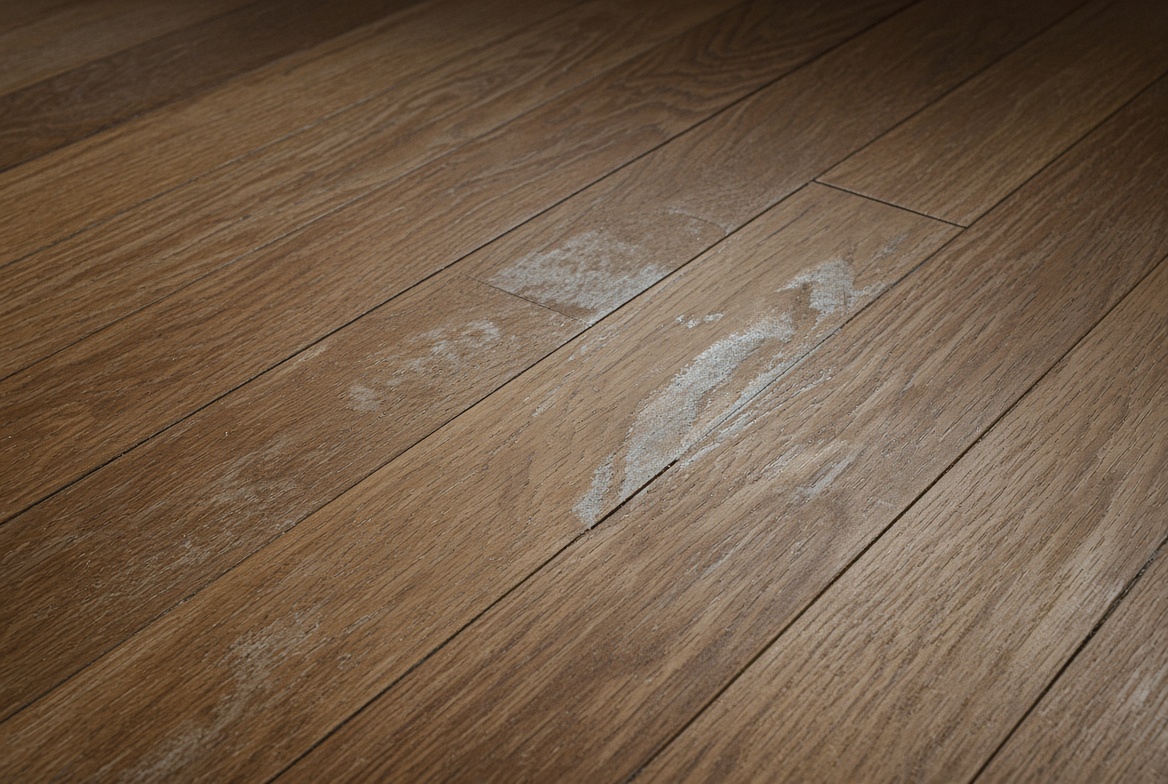 Damage usually shows up in one or more of these ways:
- Cloudy or white patches: moisture trapped under the finish leaves a milky haze that a mop cannot buff out.
- Dull finish: repeated heat wears down sheen, most visibly along the routes the mop travels most.
- Cupping: board edges rise above the center when the underside takes on more moisture than the top.
- Dark lines at seams: water sits between boards and discolors the wood there.
- Lifting veneer: on engineered planks, moisture can weaken the bond between the top layer and the core.
One pass is unlikely to ruin a floor. The real risk is the weekly habit, because each session adds a little more moisture to wood that may not recover fully before the next one.
Does the Type of Hardwood Floor Change the Answer?
Site-finished and factory-finished solid wood
Both have a surface coat, and a sound coat buys you some protection from spills. It does not make the floor steam-proof. Older polyurethane that has worn thin in hallways is especially exposed.
Oiled and waxed floors
These finishes soak into the wood rather than forming a hard film. They should never meet a steam mop, and most water-based cleaners are wrong for them too. Waxed floors in particular can turn white where moisture sits.
Engineered wood
Engineered planks handle dry climates well, which is part of why they are so common in newer Valley homes. The real wood layer on top is still wood, and it is often thin, so moisture trouble can be harder to repair.
Laminate and vinyl that look like wood
These are not hardwood, but steam is a poor match for them as well, since it can work into the seams of many plank products. If you are not sure what you have, assume steam is not safe until you find out.
Why Phoenix Homes Add Another Risk
Wood responds to the humidity around it. In the Valley’s very dry air, boards tend to give up moisture and shrink slightly, which can open small gaps between them. Those gaps are direct paths for steam. Then monsoon season brings sudden swings in humidity, and the floor moves again. Adding heat and moisture on top of that cycle asks a lot of the boards and of the finish.
Grit is the other local factor. Fine desert dust is abrasive, and it scratches finish every time someone walks across it. A floor with more scratches has more places for moisture to enter. That is why dry dust removal matters so much here, and why skipping it before any kind of mopping does harm.
How to Clean Hardwood Floors Without a Steam Mop
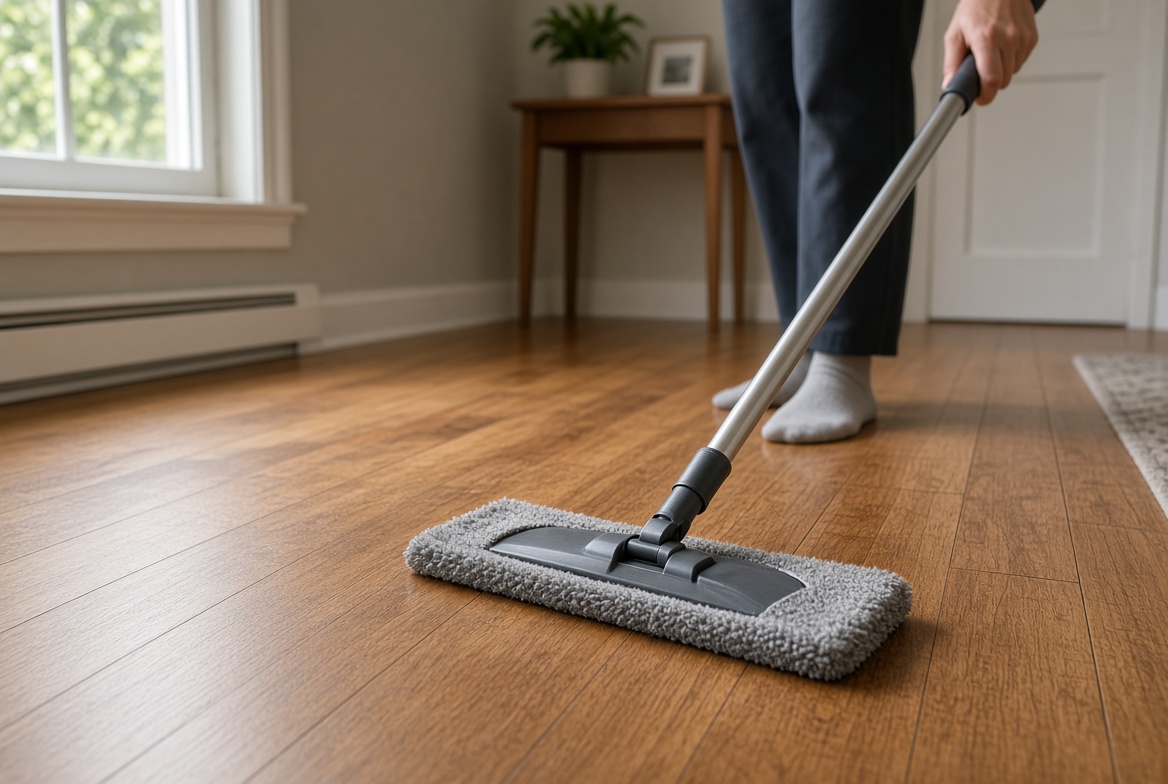
This routine is safe for most finished wood floors. Check your floor maker’s instructions first if you have them.
- Remove grit first. Use a dry microfiber pad or a vacuum with a hard-floor setting. Keep the beater bar off.
- Choose a pH-neutral cleaner. Pick one labeled for finished wood. Skip oil soaps, ammonia, bleach and vinegar mixes, which can dull or strip finish over time.
- Mist the pad, not the floor. The pad should feel barely damp. If you can see a trail of water behind it, it is too wet.
- Work in small sections. Follow the direction of the boards so you can see what you have covered.
- Dry anything that lingers. Any wet patch still visible after a minute should be wiped with a dry cloth.
Spills should be blotted right away instead of left for mop day. For longer-term habits such as furniture pads, sun control and humidity, our guide to maintaining hardwood floors goes deeper.
Already Used a Steam Mop on Your Floors?
Stop using it, then take a look in low, angled light. Search for hazy patches, raised board edges and dark seams, starting along the paths you mopped most. If the floor looks normal, there is no reason to panic; just switch to the routine above. Note that a cloudy finish or a cupped board is not something a cleaning can reverse. Those are finish or moisture problems, and it helps to find out which before anyone applies a product on top.
When to Book Professional Hardwood Floor Cleaning
Careful home mopping removes surface soil, but it does not do much for the film that builds up over years of store-bought polish, or the grime pressed into a tired finish. Consider a professional visit if the floor still looks dull the day after you clean it, if footprints appear almost as soon as you finish, or if you are moving into a home and do not know what was used on the floors before.
Barefoot Clean Floors starts by inspecting the floor and identifying what it is, then pre-treats stains and cleans with a gentle, controlled-moisture method rather than saturating the wood. A protective sealant or polish can follow where that flooring type calls for it. Most floors are dry within a few hours, depending on humidity and ventilation. See how the visit works on our hardwood floor cleaning services in Phoenix page, or read about floor cleaning across Phoenix if your home also has tile, vinyl or concrete. The full list of what we clean is on our services page.
Frequently Asked Questions
Can you steam clean hardwood floors if they are sealed?
A sealed floor is more resistant than a bare one, but steam can still reach the wood at seams and worn areas, and heat can affect the finish. Sealed does not mean steam-proof.
Are steam mops safe for engineered hardwood?
Generally they are not recommended, since the top layer is real wood and moisture can weaken the layers beneath it. Follow the care instructions from the floor maker.
Is vinegar a safer choice than steam?
It is less risky than steam in the short term, but acidic mixes can dull a finish with regular use. A pH-neutral cleaner made for finished wood is the better everyday option.
How often should hardwood floors be cleaned?
Dry dusting every few days suits most homes, with more in entries and in houses with dogs. Damp mopping every week or two is usually plenty. Ask us about a schedule based on your traffic and pets.
Are your hardwood floor cleaning products safe for kids and pets?
Yes. We use eco-friendly, non-toxic cleaning products chosen to be safe for children and pets.
Get an Honest Look at Your Floors
If you are not sure what your floor needs, or whether a steam mop has already left a mark, we can take a look. Barefoot Clean Floors offers free, transparent estimates with no hidden fees across the Phoenix area. Call (602) 603-4781 or request a free quote.
References
- National Wood Flooring Association: trade association resources on wood floor types and care.
