
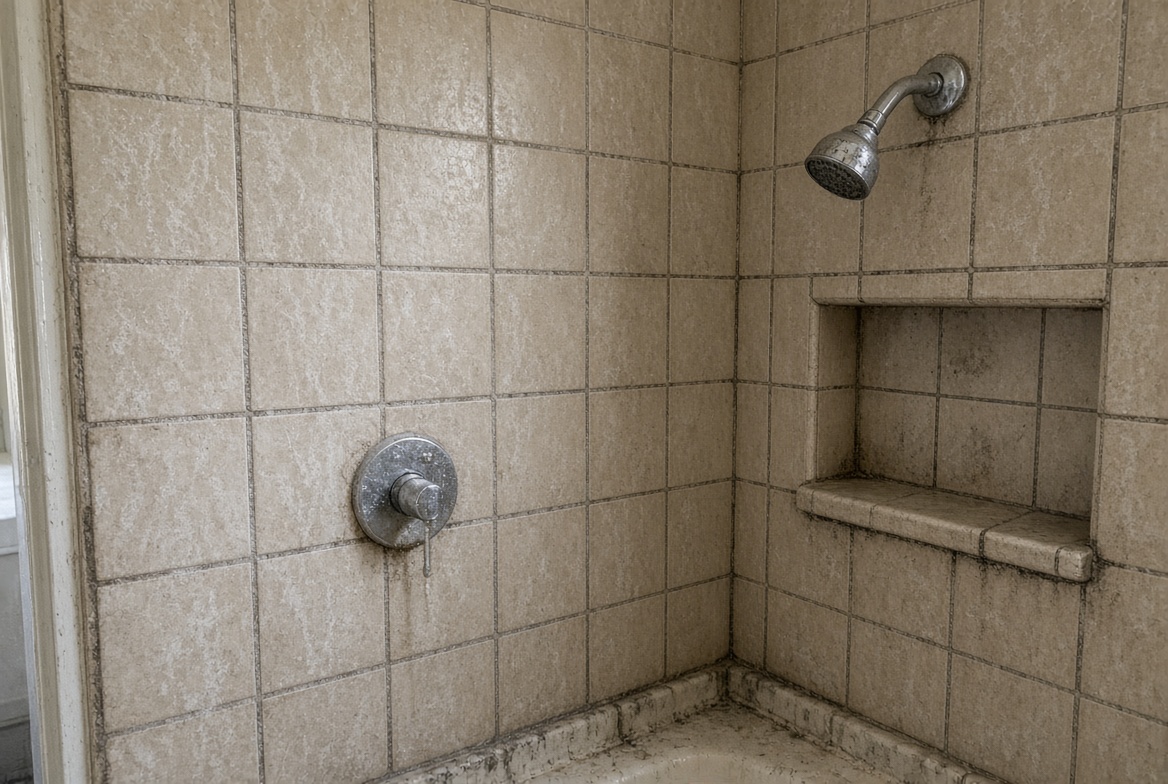

Shower tile and grout cleaning works best in three steps: dissolve the hard-water and soap film on the tile, deep-clean the grout joints where mildew and residue collect, then rinse thoroughly and seal the grout so water and soap stop soaking in. Skipping the rinse or the seal is why many showers look dingy again within weeks.
Bathrooms are where tile works hardest. The water in the Valley is hard, showers get used every day, and the enclosure rarely dries completely before the next use. This guide explains what is actually building up on your shower walls, how to clean it safely at home, and when to call a professional tile and grout cleaning service instead.
What Builds Up on Shower Tile in the Valley
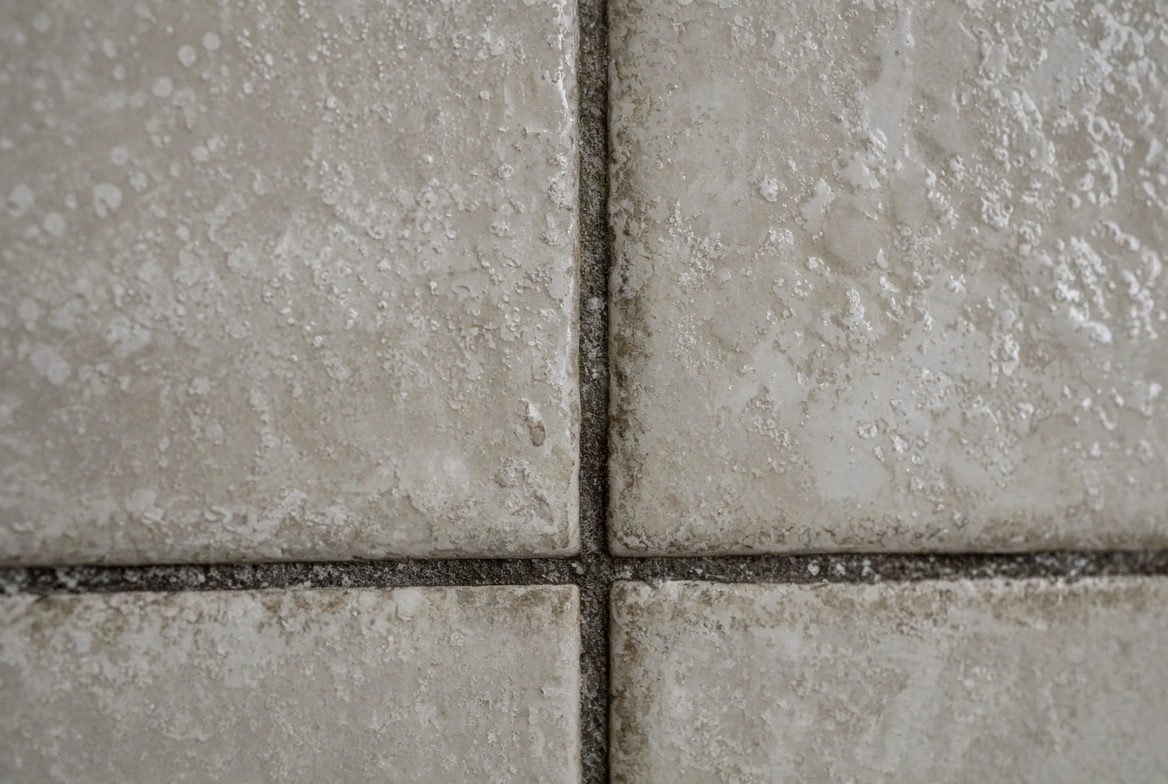
Three different problems usually show up together, and each one needs a slightly different approach:
- Hard-water film. As shower water evaporates, it leaves dissolved minerals behind. On glossy tile it shows as a cloudy haze or white spotting; around fixtures and along the bottom row it can build into crusty scale.
- Soap scum. Bar soap and some body washes react with the minerals in hard water and leave a waxy layer. It clings to the mineral film and catches skin oils and shampoo.
- Dark or discolored grout. Grout is porous. It absorbs water, soap and body oils, and in corners, niches and the lower joints it can stay damp long enough for mildew to grow.
The tile surface itself is usually the easy part. The grout is where most of the visible dinginess lives, and it is also where scrubbing alone stops working.
Shower Tile and Grout Cleaning at Home: A Safe Routine
For a shower that is dull but not badly neglected, this routine handles most buildup:
- Rinse and ventilate. Run hot water for a minute to soften film, then turn on the exhaust fan.
- Treat the tile face. Use a cleaner made for soap scum and mineral film on your tile type, and let it sit for the time on the label. Wipe with a non-scratch pad.
- Work the grout separately. Use a stiff nylon grout brush along each joint. Never use a wire brush; it scratches glazed tile and damages grout.
- Rinse thoroughly. Leftover cleaner is its own residue and attracts the next layer of grime.
- Dry the walls. A squeegee and a towel on the lower rows make a visible difference.
Two cautions matter. First, check your tile type before reaching for anything acidic. Ceramic and porcelain tolerate most bathroom cleaners, but natural stone such as marble can etch when it meets acids, including vinegar. Second, never mix cleaning products, especially bleach with ammonia or acids. If you want a gentle mix for floor grout, our post on the best DIY mix for cleaning tile and grout covers the basics.
Why Shower Grout Stays Dark After Scrubbing
If the tile looks clean but the grout lines are still gray, brown or speckled, the soil is below the surface. Scrubbing reaches the top of the joint. It does not pull out the soap, minerals and organic material sitting deeper in the pores.
Several things are usually going on at once:
- Bleach sprays whiten mildew stains on the surface without removing the residue that feeds new growth.
- Scrubbing loosens soil but leaves it in the joint unless it is flushed out.
- Unsealed grout absorbs water every time the shower runs, so it never fully dries in the lower rows and corners.
Moisture is the root problem. The U.S. Environmental Protection Agency’s guidance on mold makes the same point: controlling moisture is the key to controlling growth. In a shower, that means cleaning the grout deeply and then keeping water out of it.
How Professional Shower Grout Restoration Works
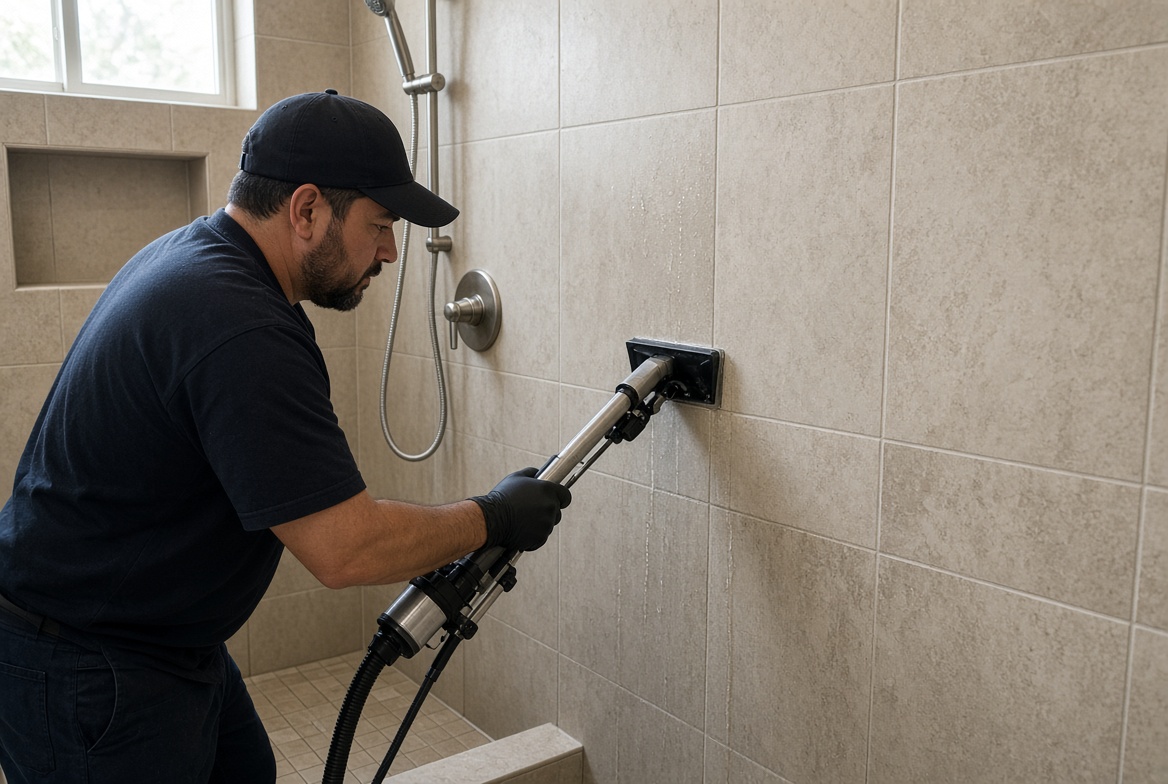
Professional shower tile and grout cleaning goes further than a brush can. Our tile visits begin with a walk-through to identify the tile, whether ceramic, porcelain or natural stone, and to check the condition of the grout. Stone gets gentler, stone-safe products. We then pre-treat the grout lines and let the solution loosen the grease, soil and mineral deposits sitting in the pores. Extraction equipment agitates the surface and flushes the loosened residue away, reaching textured finishes and tight corners where a brush skates over the top.
Once the shower is rinsed and clean, we talk through grout sealing. A penetrating sealer soaks into the joints and makes them far less likely to absorb water and soap, which is exactly what a shower needs. We match the sealing approach to the room; a shower used every day benefits from a more robust option than a guest bath. For homes near South Mountain, our page on residential tile and grout cleaning in Ahwatukee describes how we handle showers and tub surrounds alongside the rest of the house, and we also clean tile and grout in Tempe, where older bathrooms often have many more grout lines per wall.
Keeping a Clean Shower Clean
A restored shower stays bright much longer with a few small habits:
- Squeegee after each use. Removing the water before it evaporates is the single best defense against hard-water film.
- Run the exhaust fan during the shower and for a while after.
- Use a pH-neutral cleaner weekly instead of harsh products that strip sealer.
- Switch to liquid body wash if bar soap scum is a recurring problem.
- Check the sealer. If water darkens the grout instead of beading, the protection has worn. Our post on grout color sealing vs. clear grout sealer explains the two sealing options.
When to Book Professional Shower Tile and Grout Cleaning
Home cleaning is enough for routine upkeep. Consider professional help when:
- Grout stays dark after a thorough scrub.
- Mildew keeps returning in the same corners within days.
- White scale has built up around fixtures and on the lower rows.
- The shower is natural stone and you are not sure which products are safe.
- You are preparing a home for sale, a rental turnover or guests.
Cracked or missing grout is a different issue. Cleaning will not fix it, and water getting behind the tile should be looked at promptly.
Frequently Asked Questions
Can I use vinegar on shower tile?
On glazed ceramic and porcelain, diluted vinegar can help with mineral film if you rinse well. Do not use it on marble, travertine or other natural stone, which acids can etch, and avoid using it repeatedly on grout, which it can wear down.
Is bleach good for shower grout?
Bleach can lighten mildew staining, but it does not remove the residue underneath and can fade colored grout. Never mix it with other cleaners. A deep clean followed by sealing is more effective long term.
How long does professional shower grout cleaning take to dry?
Most surfaces are dry within a few hours, though humidity and airflow in your home can change that. We will let you know when the shower can be used again.
Are your tile cleaning products safe for kids and pets?
Yes. We use eco-friendly, non-toxic products chosen to be safe for children and pets.
Bring Your Shower Back
If scrubbing no longer changes how your shower looks, the problem is inside the grout. Barefoot Clean Floors cleans shower tile, tub surrounds, kitchens, floors and patios across the Valley and talks through sealing so the clean lasts. Call (602) 603-4781 or request a free quote. Estimates are free and transparent, with no hidden fees.
References
- U.S. Environmental Protection Agency: Mold: moisture control and mold basics for homes.
- Tile Council of North America: tile installation and care guidance.
