
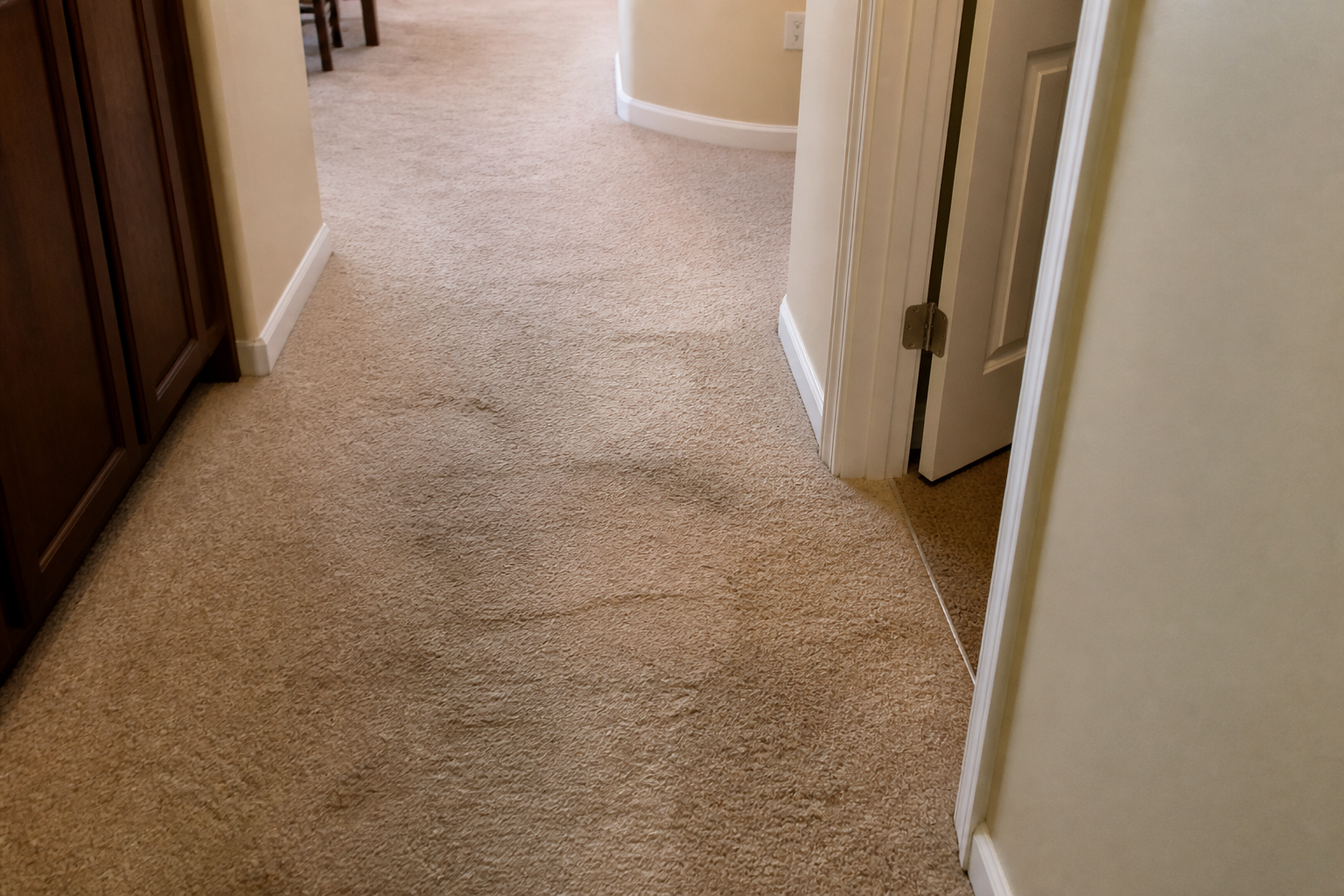

Understanding carpet wear Phoenix homes develop over time helps you protect flooring where daily life concentrates foot traffic, grit, and friction. Not every square foot of carpet ages at the same rate. Entries, hallways, turns, and transition zones often show matting, fiber breakdown, and visible paths long before bedrooms or formal spaces do. Recognizing those hot spots early can guide cleaning schedules, rug placement, and habits that may slow damage in a desert climate where fine soil is easy to track indoors.
This article identifies five common high-wear areas, explains why they deteriorate faster, and outlines practical care steps. When soil becomes embedded or traffic patterns become visible, professional Steam Carpet Cleaning Phoenix can help remove abrasive particles that contribute to fiber wear. These tips support maintenance; they do not reverse structural damage to padding or tufts that are already worn through.
Key Takeaways
- Entries and main hallways typically receive the highest step count and outside soil, making them the first areas to show wear paths.
- Turns in hallways and doorways concentrate pivoting motion that bends and crushes fibers repeatedly.
- Stairs combine downward pressure and edge friction, which can mat pile faster than flat corridors.
- Transitions between carpet and hard flooring create scrape points for grit caught in shoe treads.
- Living areas in front of sofas and media setups accumulate oils, dust, and repeated foot traffic from daily routines.
How Wear Differs From Staining and Soiling
Soil darkens carpet and can often be improved with cleaning. Wear is physical change to fibers: matting, loss of twist, bare spots, or transparent tufts that no longer stand upright. Abrasive particles grinding against yarn cuticles contribute to wear, which is why desert dust tracked into Phoenix homes matters beyond appearance alone.
Regular vacuuming and periodic extraction remove grit that acts like sandpaper under foot pressure. The Carpet and Rug Institute (CRI) emphasizes consistent vacuum maintenance as part of preserving carpet appearance. Cleaning cannot restore fibers that are already broken, but it can reduce one factor that accelerates damage in high-traffic zones.
Area 1: Main Entryways and Foyers
The first ten to fifteen feet inside an exterior door is among the hardest-working carpet in most homes. Every arrival brings shoes—or barefoot grit from patios and garages—onto the pile. In Phoenix, dry desert soil is fine enough to lodge between fibers and resist casual vacuum passes.
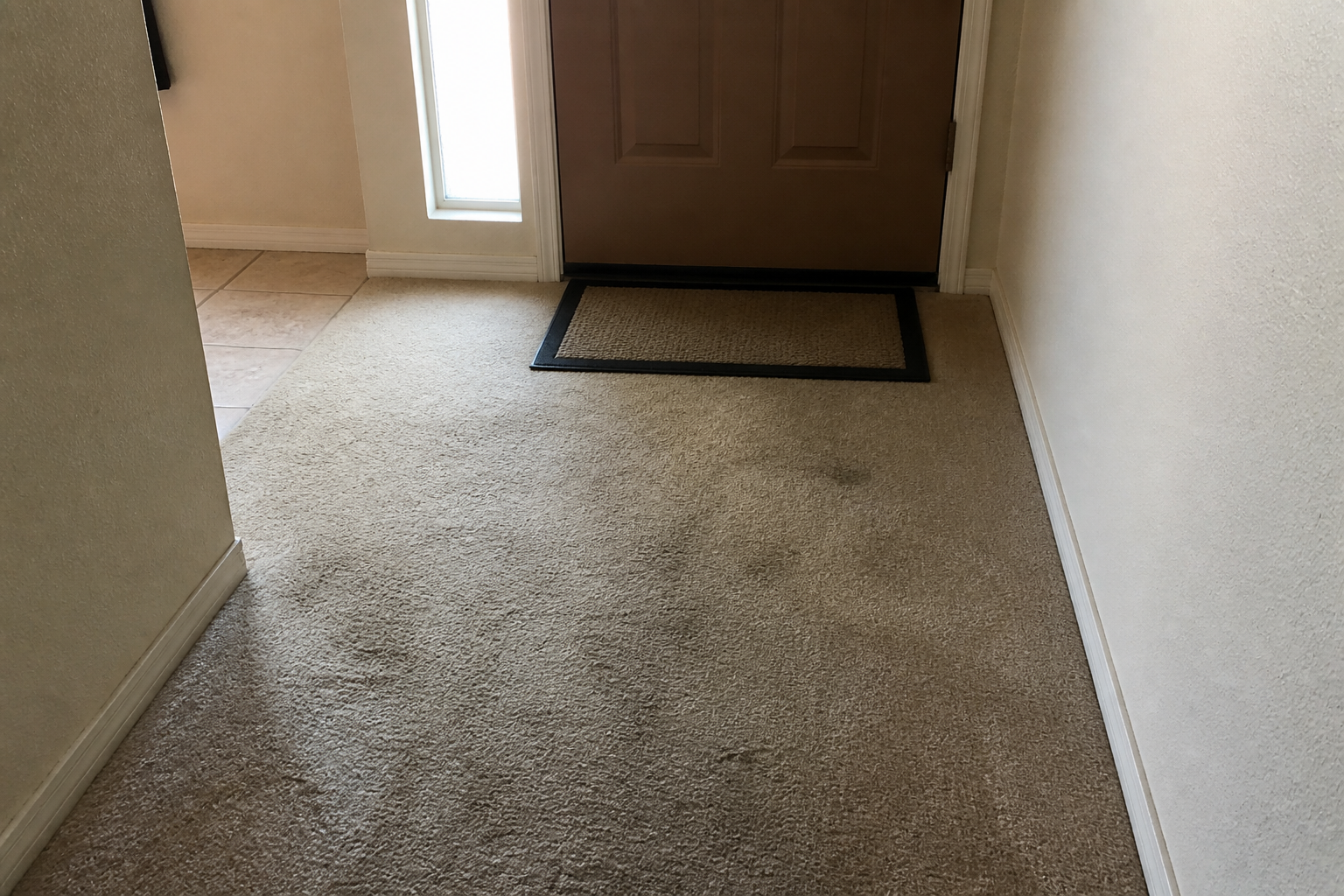
Common signs of entry wear include:
- Permanent-looking paths even after vacuuming.
- Darkening at the threshold where carpet meets tile or wood.
- Matting that does not lift after grooming with a carpet rake.
Practical steps include exterior and interior mats, a shoes-off or shoe-change policy if it fits your household, and frequent vacuuming of the entry lane with slow overlapping passes. When paths persist, targeted professional cleaning can address embedded desert soil; see how to approach Arizona desert dirt in carpet fibers for region-specific context.
Area 2: Hallways and Corridors
Hallways function as interior highways. Bedrooms, bathrooms, and living spaces connect through narrow runs where everyone walks the same center line. Over months and years, that repetition compresses pile and bends fibers in one direction.
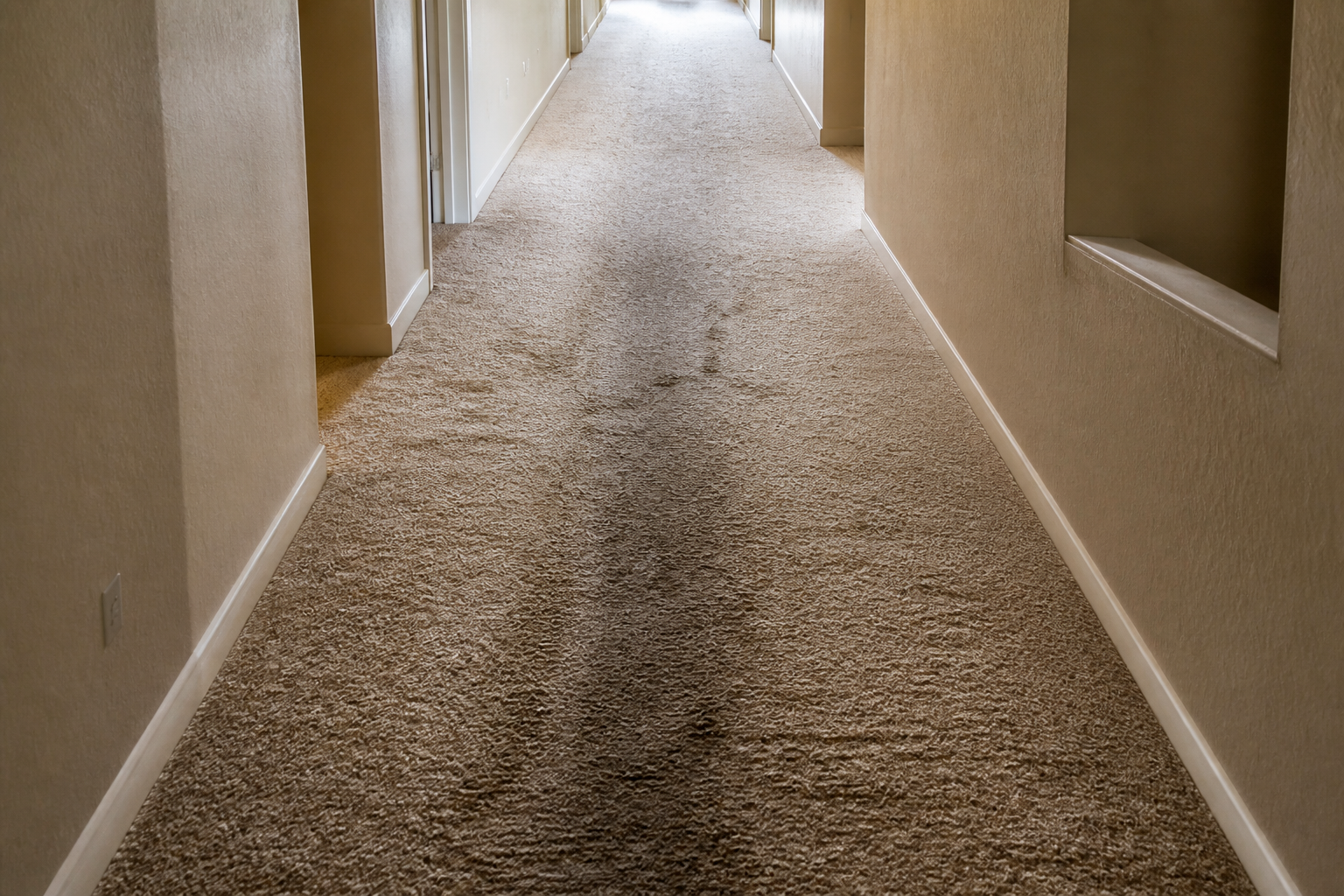
Hall wear accelerates when:
- Children and pets run the same route repeatedly.
- Laundry, groceries, and supplies are carried through daily.
- Vacuuming skips edges while concentrating only on the center path, allowing grit to remain at baseboards where it spreads back into traffic lanes.
Runner rugs with non-slip pads can shift some traffic stress off carpet when placement does not create trip hazards. Rotate small rugs periodically if furniture layout allows so no single carpet strip bears all pivoting at doorway mouths.
Area 3: Staircases
Stairs combine vertical and horizontal wear. Each step receives concentrated pressure on the tread nose and landing edges. People often pivot on landings where carpet turns direction, doubling bend stress on tufts.
Stair carpet also lacks the large open surface area that helps distribute soil across a room; instead, the same few square feet on each tread see full body weight on every trip. Handrails reduce fall risk but do not reduce foot impact on pile.
Maintenance tips for stairs:
- Use a vacuum attachment designed for edges and treads rather than skipping stairs between room cleanings.
- Address spills quickly to avoid wicking into padding on treads where replacement is costly.
- Inspect carpet grips and transitions at top and bottom; loose edges can snag and pull fibers.
When stair traffic is heavy, some households install hard-surface runners or carpet stair treads that can be replaced individually. That is a design choice rather than a requirement, but it reflects how aggressively stairs wear compared with open floor plans.
Area 4: Carpet-to-Hard-Floor Transitions
Where carpet meets tile, wood, or laminate, shoe grit often collects at the seam. Each crossing scrapes particles across the carpet side of the transition strip. Metal or plastic transition bars can also crush pile if improperly installed or if furniture is dragged across them during moves.
Kitchen openings, patio sliders, and garage-adjacent laundry rooms are frequent transition wear points in Phoenix floor plans designed for indoor-outdoor living. Dust from desert winds can accumulate at slider tracks and migrate onto adjacent carpet when doors slide open.
Keep transition zones vacuumed and wipe hard surfaces regularly so grit does not feed back onto carpet. After construction or heavy move-in activity, extraction cleaning can flush soil that sweeping alone leaves behind.
Area 5: Living Room Traffic Lanes
Open living areas look spacious, but families still create lanes. The path from sofa to kitchen, the route to a primary TV or gaming area, and spaces in front of frequently used chairs see repeated friction. Oils from skin and snacks can bind dust to fibers in those zones, making soil stick even when visible crumbs are gone.
Pets add claw contact and body oils in favorite resting spots. Households with dogs or cats often notice oval wear patterns near couches or sunny floor patches. Carpet cleaning considerations for Phoenix families with pets can help when animal traffic contributes to living-room soil.
Furniture rearrangement occasionally—when room function allows—can shift traffic slightly so one tuft group does not absorb every crossing. Area rugs in open plans should use appropriate pads to avoid dye transfer and slippage.
Phoenix Climate Factors That Can Accelerate Wear
Regional conditions do not cause wear by themselves, but they influence how soil behaves indoors.
- Dry dust: Low humidity keeps fine particles lightweight and mobile; they sift into pile rather than clumping for easy pickup.
- Monsoon season: Moisture on shoes can mix with dust and create mud tracked onto entries before it dries and hardens in fibers.
- Extended HVAC use: Air movement can distribute dust that eventually settles on carpet; combined with traffic, that dust becomes abrasive underfoot.
For households sensitive to accumulated dust, carpet cleaning and Phoenix dust concerns may be part of a broader indoor care approach alongside regular vacuum maintenance recommended in general EPA indoor air resources at epa.gov/indoor-air-quality-iaq.
Maintenance Habits That Help High-Wear Zones
Focused habits often outperform occasional deep cleaning alone when the goal is slowing wear paths.
- Vacuum high-traffic lanes more often than guest rooms, using a clean filter and appropriate height for your carpet type.
- Spot-clean spills before they spread into larger areas; blot rather than rub to limit fiber distortion.
- Schedule professional cleaning when paths stay visible after vacuuming or when it has been roughly a year since the last extraction in busy homes—timing varies by household size and habits.
- Ask questions before service if you are unsure what to expect; common Phoenix homeowner carpet cleaning questions cover frequency, preparation, and results in plain language.
Barefoot Clean Floors provides eco-friendly, non-toxic carpet cleaning for residential and commercial clients in Phoenix. Extraction can remove embedded grit that contributes to fiber abrasion in the five areas above. Tile and grout, upholstery, and commercial services are also available for homes addressing multiple surfaces where wear and soil overlap.
When Wear May Indicate Replacement Rather Than Cleaning
Cleaning improves soil and can refresh appearance, but it cannot rebuild missing tufts. Consider evaluation for repair or replacement when:
- Padding feels thin or crunchy under high-traffic paths.
- Transparent or missing tufts expose backing in stairs or entries.
- Seams split repeatedly despite re-tacking.
- Odors return quickly after cleaning because padding was affected by old moisture.
A carpet professional can often distinguish cleanable matting from structural wear during an in-home visit.
Frequently Asked Questions
Which home area usually wears carpet the fastest?
Main entry paths from exterior doors typically show wear first because they combine the highest soil load with constant foot traffic. Hallways connecting daily-use rooms are a close second.
Can professional cleaning fix worn traffic paths?
Cleaning can remove soil that makes paths look darker and may improve texture when grit is the main issue. It cannot restore fibers that are already crushed or missing. Severe mechanical wear may remain visible after extraction.
Do area rugs prevent hallway wear?
Runners can redirect some abrasion to a replaceable surface when properly secured with non-slip padding. They work best on flat hall runs without sharp turns that cause buckling.
Why does Phoenix dust make wear worse?
Fine desert soil can act as an abrasive when trapped in carpet and walked on repeatedly. Removing that soil through vacuuming and periodic professional cleaning can reduce one contributor to fiber breakdown.
How often should high-traffic areas be professionally cleaned?
Frequency depends on occupants, pets, and shoe habits. Busy entries and hallways in active households often benefit from more frequent attention than spare bedrooms. Your cleaner can suggest intervals based on visible soil and prior results.
Conclusion
Carpet wear Phoenix homes show first appears where life concentrates: entries, hallways, stairs, transitions, and living-room lanes. Desert dust and daily friction work together to mat fibers and highlight paths. Regular vacuuming, smart rug use, and periodic professional extraction can help manage soil that accelerates wear. When high-traffic areas need deeper care, contact Barefoot Clean Floors at (602) 603-4781 to schedule Steam Carpet Cleaning Phoenix.
References
- Carpet and Rug Institute — Carpet Care and Cleaning — vacuuming and maintenance guidance for residential carpet.
- U.S. Environmental Protection Agency — Indoor Air Quality (IAQ) — general information on indoor dust and particle sources.
