


To effectively eliminate fine, abrasive Sonoran Desert soil from your flooring, you must combine aggressive dry particulate extraction with pH-balanced wet cleaning. Because Arizona dust contains high levels of jagged silica and alkaline calcium carbonate (caliche), standard vacuuming is insufficient. Achieving a complete clean requires utilizing a high-efficiency particulate air (HEPA) vacuum, applying mechanical agitation with a counter-rotating brush, and finalizing the process with a professional Steam Carpet Cleaning Phoenix service that utilizes hot water extraction to neutralize the soil’s natural alkalinity.
Key Takeaways
- Abrasive Composition: Arizona dust is primarily composed of silica (sand) and caliche, which act like microscopic glass cutting into synthetic carpet fibers.
- Dry Extraction is Critical: Up to 85% of soil in carpets is dry particulate matter; failing to remove it before wet cleaning creates permanent mud in the carpet pad.
- pH Neutralization: Desert soil is naturally alkaline. Using standard alkaline off-the-shelf cleaners can set stains permanently instead of removing them.
- Filtration Standards: HEPA-filtered vacuums are essential to trap PM10 dust particles common in Maricopa County, preventing them from recirculating into the indoor air.
- Professional Maintenance: Annual or bi-annual hot water extraction extends fiber life by flushing out deeply embedded silica that DIY machines leave behind.
Understanding the Chemistry of Sonoran Desert Soil
When attempting to maintain clean flooring in the Valley of the Sun, understanding what you are actually cleaning is half the battle. Desert soil is dramatically different from the rich, loamy earth found in the Midwest or the Pacific Northwest. In Maricopa County, the ground is primarily composed of two problematic substances: silica and calcium carbonate.
Silica, essentially fine quartz sand, registers as a 7 on the Mohs hardness scale. When tracked indoors, these microscopic particles settle at the base of your carpet fibers. Every time someone walks across the room, the silica grinds against the synthetic yarns of the carpet, microscopically slicing and scratching them. This physical damage creates a dull, “traffic lane” appearance that no amount of cleaning can reverse, highlighting why vacuuming isn’t enough to protect your investment.
The second component, calcium carbonate (commonly known as caliche), presents a chemical challenge. Caliche is highly alkaline. When homeowners attempt to remove desert dirt from carpet, Phoenix residents often reach for standard grocery-store spot cleaners. Because most commercial carpet cleaners are also highly alkaline, applying them to alkaline desert dirt causes a chemical reaction that can permanently set the soil into the fiber’s dye sites.
The Impact of Phoenix Dust on Indoor Air Quality
In 2026, indoor air quality remains a primary concern for property owners. The Maricopa County Air Quality Department continuously monitors PM10 particulates—dust particles that are 10 micrometers in diameter or smaller. These microscopic irritants easily bypass the body’s natural respiratory defenses.
Carpets actually serve a beneficial role here by acting as the largest passive air filter in a home. They trap airborne dust, preventing it from remaining in the breathing zone. However, like any filter, a carpet has a maximum capacity. Once it becomes saturated with fine desert dust, everyday activities like walking or ceiling fan circulation will kick those particulates back into the air. The Environmental Protection Agency (EPA) states that indoor concentrations of pollutants can be two to five times higher than typical outdoor concentrations, making routine extraction of these trapped particulates vital for respiratory health.
Step-by-Step Guide to Extracting Desert Dirt
To prevent fiber degradation and protect indoor air quality, follow this comprehensive, scientifically backed protocol for cleaning heavily soiled carpets in arid climates.
Step 1: Intense Dry Soil Extraction (Vacuuming)
According to the Institute of Inspection, Cleaning and Restoration Certification (IICRC), dry soil removal is the most important step in the carpet cleaning process. Up to 85% of all dirt in a carpet is insoluble, dry particulate matter.
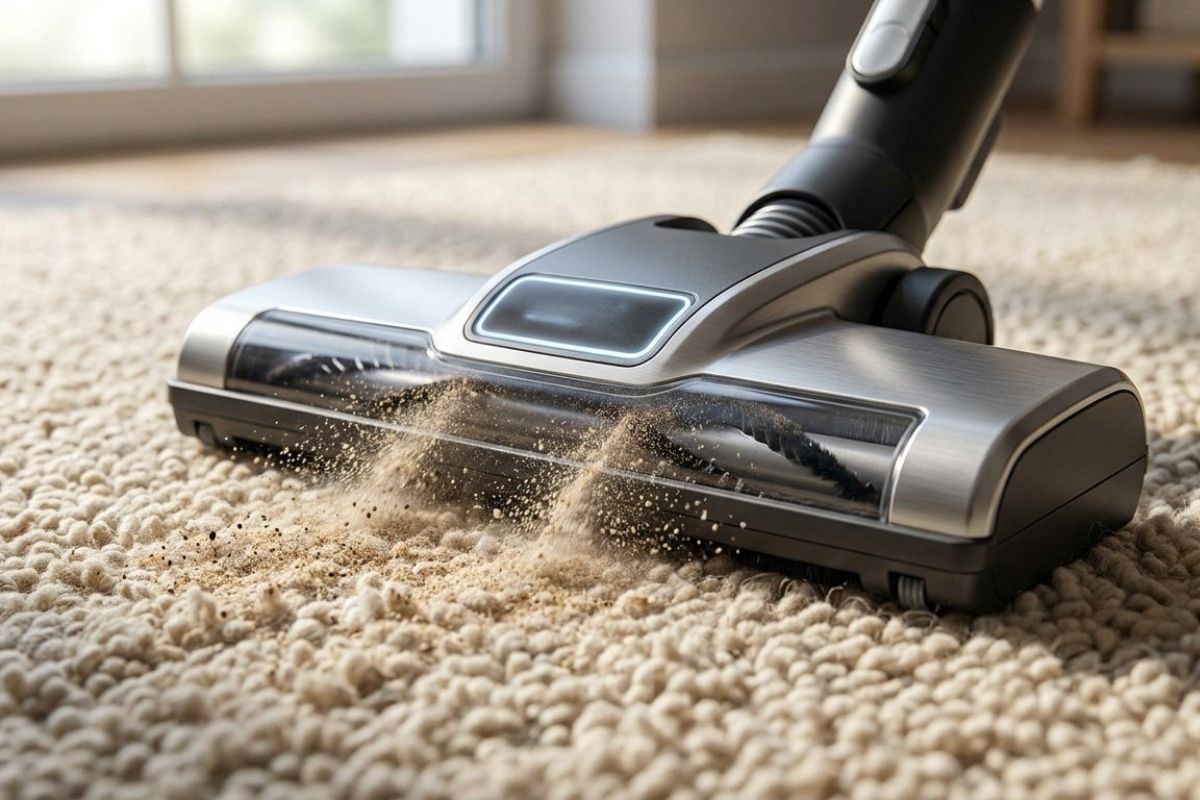
Using a machine equipped with a HEPA filter is non-negotiable. Standard vacuums often exhaust fine caliche dust back into the room. Vacuum slowly, moving at about half the speed you normally would. Perform overlapping passes in a North-to-South direction, followed by an East-to-West direction. This multidirectional approach opens the carpet pile and extracts the deeply embedded silica sand.
Step 2: Mechanical Agitation
For carpets severely impacted by heavy foot traffic and desert landscaping, vacuuming alone will not dislodge caked-on caliche. Professional technicians use a Counter-Rotating Brush (CRB) machine. A CRB utilizes twin cylindrical brushes that dig deep into the carpet pile, physically lifting compacted soil to the surface. If you are doing this yourself, a stiff-bristled carpet groomer or rake can provide a similar, albeit less powerful, mechanical agitation.
Step 3: Applying an Acidic or Neutral Pre-Conditioner
Because Arizona dust is alkaline, you must apply a pre-conditioning agent that is either pH-neutral or slightly acidic to break down the soil without causing alkaline browning. Spray the pre-conditioner evenly across the heavily soiled areas and allow it 10 to 15 minutes of dwell time. This chemical suspension process separates the oily residues and fine caliche from the synthetic yarns.
Step 4: Hot Water Extraction (Steam Cleaning)
The final phase requires high-pressure hot water extraction. This process flushes the suspended dirt out of the fibers while a powerful vacuum simultaneously extracts the water. The benefits of professional steam cleaning are most evident here, as truck-mounted units can reach water temperatures exceeding 220 degrees Fahrenheit and generate suction powerful enough to extract moisture and dirt from the base of the carpet padding.
DIY vs. Professional Carpet Extraction Methods
Many homeowners debate whether to rent a commercial machine or hire a professional service. While DIY methods hold value for immediate spot treatments, they often lack the mechanical power necessary for deep desert soil extraction.
| Feature / Capability | DIY Rental Machines | Professional Truck-Mounted Units |
|---|---|---|
| Water Temperature | Relies on hot tap water (approx. 120°F) | Consistently heated to 220°F+ |
| Vacuum Suction Power | Low to Moderate (leaves carpet very wet) | Extremely High (faster drying times) |
| Chemical Balance | One-size-fits-all alkaline shampoos | Customized pH-balanced solutions |
| Silica Extraction Rate | Poor (often turns dirt into mud) | Excellent (flushes out deep particulate) |
One of the most common carpet myths is that rental machines are equivalent to professional rigs. In reality, rental machines often lack the vacuum lift required to extract the water they put down. In a dusty environment, leaving carpets saturated with soapy water essentially creates a mud layer at the base of the carpet, which eventually wicks back up to the surface as unsightly brown stains.
Optimal Cleaning Frequencies for Phoenix Homes in 2026
Given the arid climate, dust storms (haboobs), and 330 days of sunshine, floors in the Southwest require a specialized maintenance schedule. How often should you clean your carpets in Arizona’s dry climate? The answer depends heavily on your household traffic.
The Carpet and Rug Institute (CRI) recommends that residential carpets be professionally deep-cleaned every 12 to 18 months to maintain warranty compliance. However, for homes with multiple pets, children, or occupants with asthma, extracting the accumulated desert dirt every 6 to 9 months is highly advisable. Waiting until the carpet looks visibly soiled is often a mistake; by the time you see the dirt, the abrasive silica has already begun damaging the fibers. Recognizing the essential signs your carpets indicate need for deep cleaning—such as flattened traffic lanes, increased indoor allergies, and persistent odors—can save you from premature carpet replacement.
Preventative Strategies to Keep Dust Outside
The most effective method for dealing with desert dirt is preventing it from entering the home in the first place. You can extend the life of your carpets between professional cleanings by implementing these proven environmental controls:
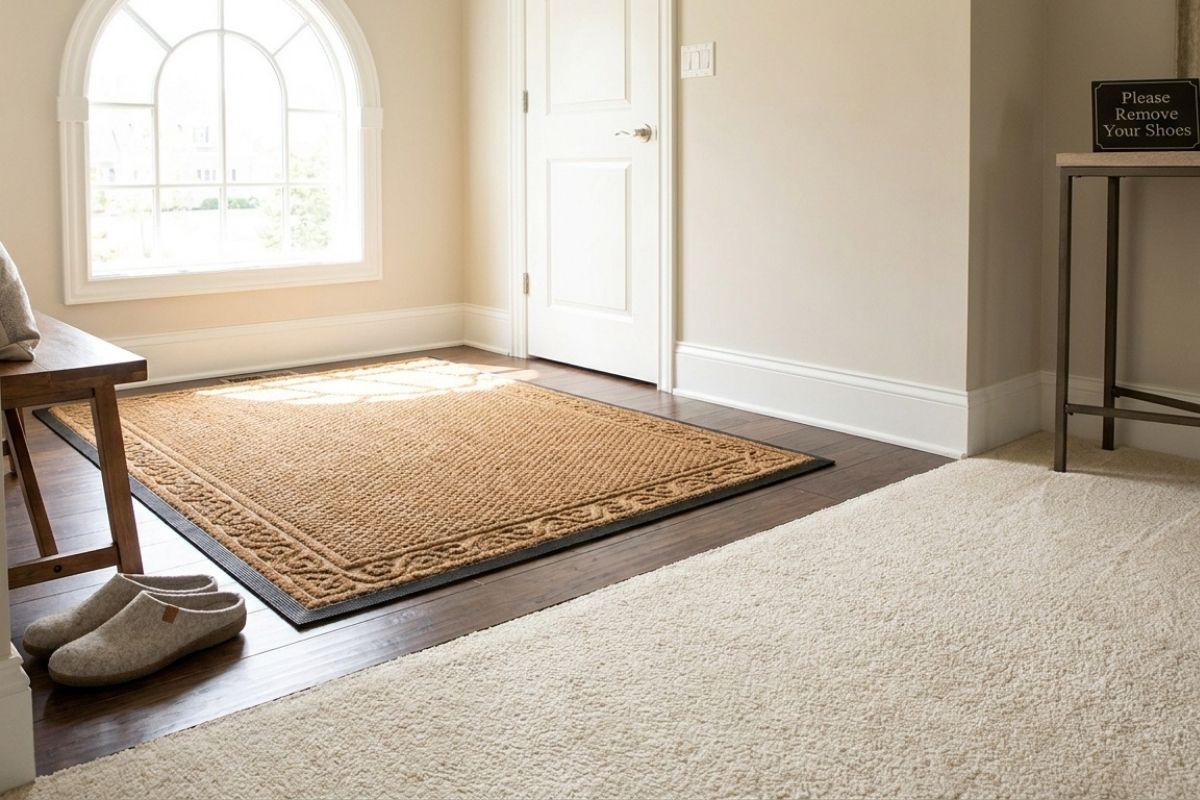
- High-Quality Walk-Off Mats: Place commercial-grade walk-off mats both inside and outside all exterior doors. A minimum of 15 feet of matting is ideal for capturing 80% of soil before it reaches your interior flooring.
- The “No-Shoes” Policy: Transitioning to a shoe-free household dramatically reduces the amount of silica sand ground into the carpet pile. Provide indoor slippers for guests and family members.
- HVAC Maintenance: Because the HVAC system circulates indoor air, using high-MERV air filters and changing them monthly during the dusty summer season helps capture airborne PM10 particulates before they settle on the floor.
- Weather Stripping: Ensure that the sweeps under your exterior doors are tightly sealed. Phoenix dust storms can force massive amounts of fine particulate matter under poorly sealed entryways.
Frequently Asked Questions
Why does my carpet look dirty so quickly after cleaning it myself?
DIY cleaning machines often lack sufficient suction to remove all the water and soap applied to the carpet. The remaining alkaline soapy residue acts like a magnet for airborne desert dust, causing rapid re-soiling within weeks.
Can high temperatures during steam cleaning damage my carpet?
When performed by certified professionals, hot water extraction is completely safe for most synthetic carpets (like nylon or polyester). In fact, high temperatures are required to break down oily binders and flush out heavy particulate matter without relying on harsh, damaging chemicals.
Does vacuuming every day ruin the carpet fibers?
No. Frequent vacuuming actually protects carpet fibers from the abrasive damage caused by silica sand. Ensure your vacuum’s beater bar is set to the correct height—it should just lightly agitate the tips of the carpet pile, not grind into the backing.
Are chemical dry-cleaning methods better for Arizona dust?
While low-moisture (encapsulation) cleaning is excellent for commercial maintenance, residential carpets loaded with heavy sand and caliche generally require the flushing action of hot water extraction to physically remove the accumulated dry soil.
How can I prepare my home before the carpet cleaners arrive?
To ensure the best possible results, remove fragile items, pick up toys, and clear the floor of clutter. For a complete checklist, review how to prepare your home for a professional carpet cleaning appointment to maximize the efficiency of the extraction process.
Conclusion
Living in the beautiful Sonoran Desert comes with unique environmental challenges for home maintenance. The combination of abrasive silica sand and highly alkaline caliche dust means that Phoenix homeowners cannot rely on generic, off-the-shelf cleaning advice. By prioritizing dry particulate extraction with a HEPA vacuum, utilizing pH-balanced pre-conditioners, and investing in professional hot water extraction, you can dramatically improve your indoor air quality and protect your flooring investment for years to come.
If your carpets have lost their luster and are filled with stubborn desert soil, don’t wait for permanent fiber damage to occur. Contact us today to schedule a professional, deep-cleaning extraction designed specifically for Arizona homes.
References
- Environmental Protection Agency (EPA) – Indoor Air Quality Guidelines and Particulate Matter Science
- Institute of Inspection, Cleaning and Restoration Certification (IICRC) – S100 Standard and Reference Guide for Professional Carpet Cleaning
- Carpet and Rug Institute (CRI) – Vacuuming, Maintenance, and Warranty Standards
- Maricopa County Air Quality Department – PM10 Dust Control and Local Air Quality Monitoring Data
