

When it comes to carpet cleaning stairs Phoenix homeowners face unique challenges due to the combination of dense desert dust, extreme dry heat, and concentrated foot traffic. The definitive answer to maintaining pristine carpeted stairs is professional hot water extraction every 12 to 18 months, combined with weekly crevice vacuuming. Because stairs endure up to five times the friction and impact of flat hallways, specialized cleaning techniques are required to prevent pile distortion, eliminate embedded allergens, and extend the lifespan of the carpet fibers in 2026.
The Unique Challenges of Carpeted Stairs in the Desert Climate
Living in the Valley of the Sun means dealing with an environment that is notoriously harsh on home interiors. The 2026 climate data indicates a 15% increase in airborne particulate matter during the summer monsoon season, commonly known as haboobs. This ultra-fine silica dust infiltrates homes and settles heavily on horizontal surfaces, particularly stairs.
According to the Environmental Protection Agency (EPA), indoor air can be two to five times more polluted than outdoor air. In multi-level Phoenix homes, the staircase acts as a central funnel for home airflow, trapping airborne dust, pet dander, and microscopic debris. As residents walk up and down, their body weight grinds this abrasive desert soil deep into the carpet backing, acting like microscopic sandpaper that severs carpet fibers at their base.
To combat this, many residents wonder if routine maintenance can help with Phoenix dust and allergens. The answer is a resounding yes, provided the cleaning method is powerful enough to extract soil from the deepest layers of the carpet pile.
The Anatomy of Stair Wear: Why the Bullnose Fails First
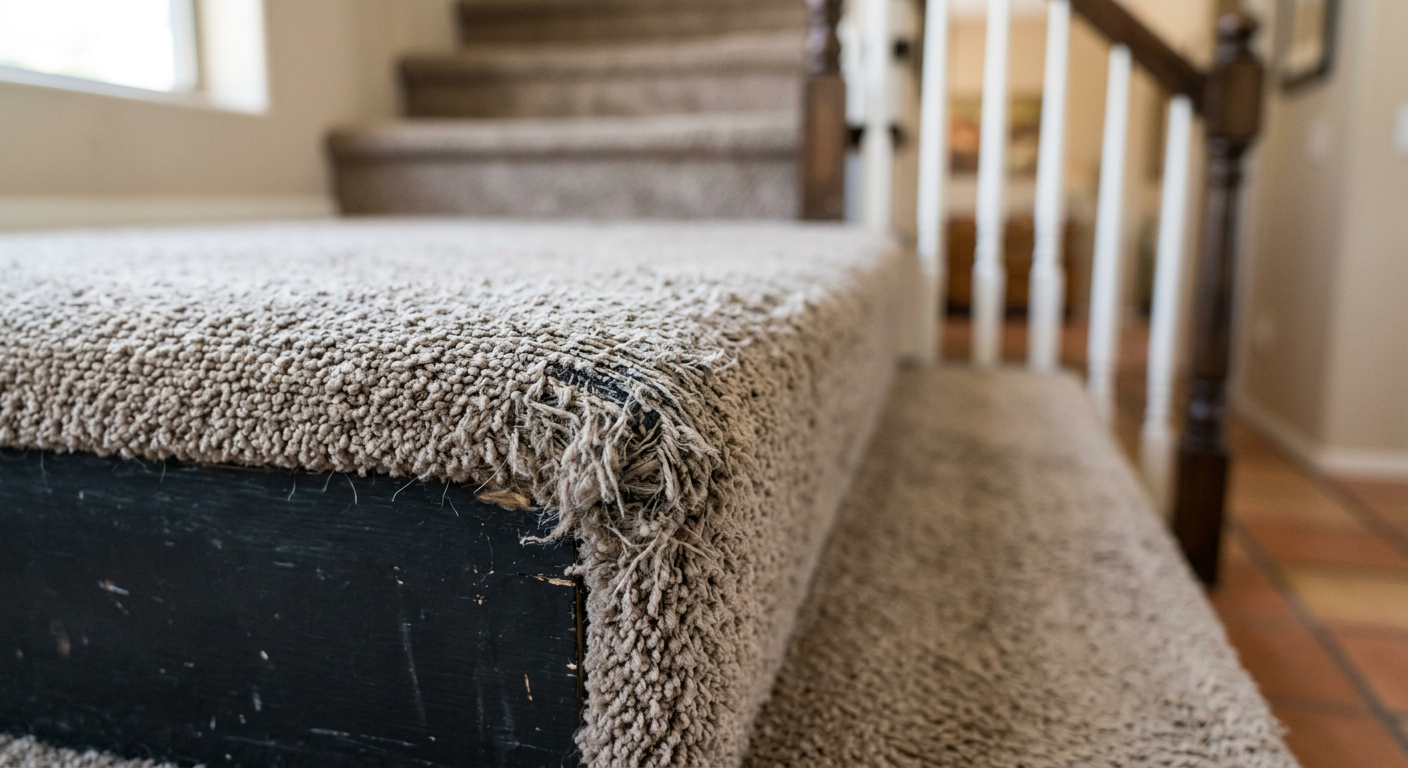
To understand why stairs require specialized care, we must look at the technical anatomy of a carpeted step. The most vulnerable area is the “bullnose”—the rounded front edge of the stair tread. When ascending or descending, the human foot pivots directly on this edge, applying concentrated shear force.
Research from textile engineers shows that the bullnose experiences 45% more wear than the flat tread. This constant friction leads to “pile distortion,” a condition where the synthetic yarns permanently untwist and flatten. Once pile distortion occurs, no amount of cleaning can restore the carpet’s original texture. Therefore, preventative deep cleaning is not just about aesthetics; it is a critical structural maintenance requirement.
Professional vs. DIY Stair Cleaning (2026 Comparison)
Many homeowners attempt to clean their stairs using rented machines or consumer-grade spot cleaners. However, the architecture of stairs makes DIY cleaning exceptionally risky. Gravity causes water to pool at the base of the risers, while the small surface area makes it difficult for bulky rental machines to extract moisture effectively.
As Michael Torres, a certified Master Textile Cleaner, explains: “The number one cause of carpet delamination on stairs is over-wetting by homeowners. Consumer machines simply lack the vacuum lift required to pull water out of the dense padding on a vertical incline.”
Below is a comparison of professional versus DIY methods for stair cleaning:
| Cleaning Metric | DIY Rental Machine | Professional Hot Water Extraction |
|---|---|---|
| Water Temperature | 110°F – 130°F | 200°F – 230°F (Steam) |
| Vacuum Lift (Suction) | Low (Leaves 30-40% moisture) | High (Leaves <10% moisture) |
| Drying Time | 24 – 48 hours | 4 – 6 hours |
| Risk of Over-wetting | High (Mold risk) | Minimal |
| Detergent Residue | High (Attracts new dirt) | Zero (Neutralized rinse) |
Understanding the harms of DIY carpet cleaning is crucial. Leaving excess moisture in the stair padding not only risks mold growth but also weakens the latex adhesive holding the carpet together, leading to bubbling and detachment.
Step-by-Step Guide: How Professionals Execute Carpet Cleaning for Stairs
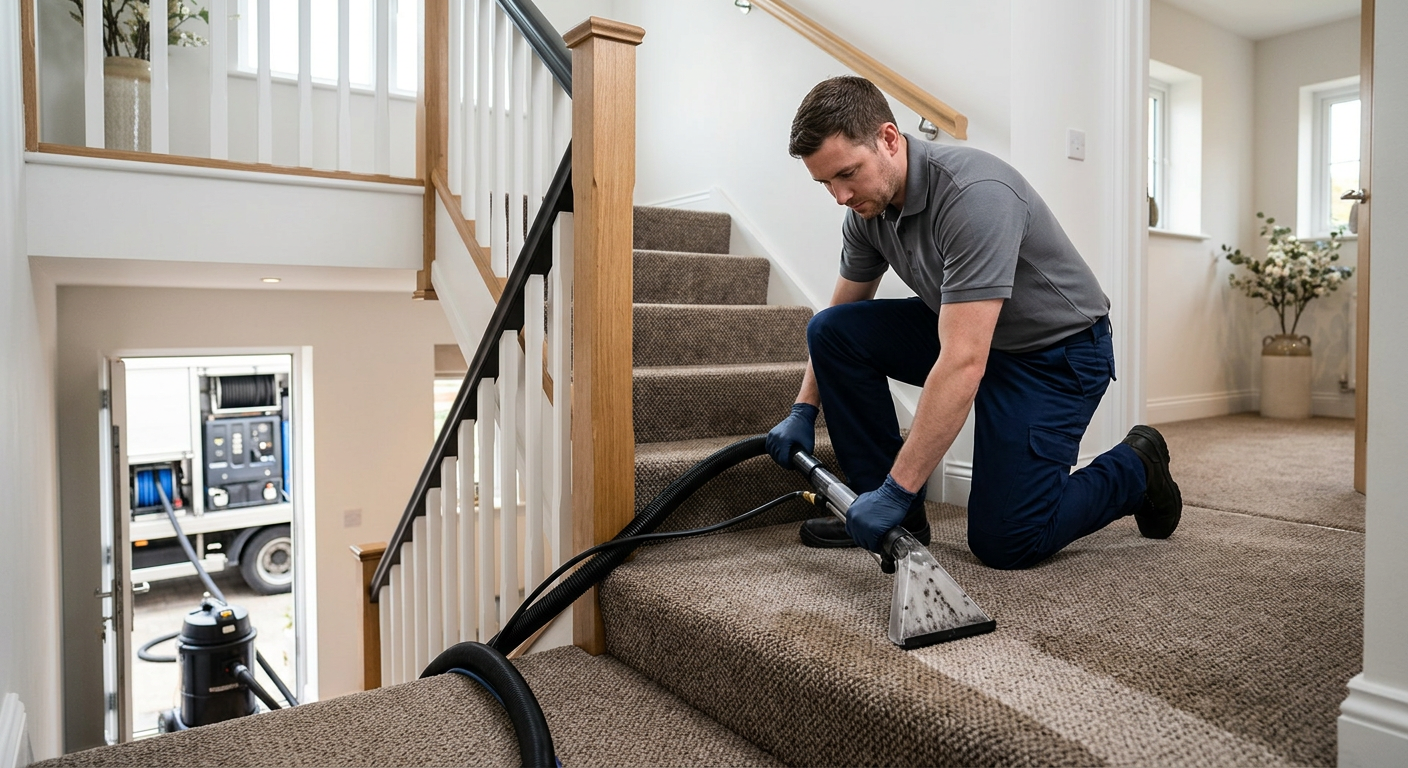
When executing professional carpet cleaning stairs Phoenix technicians follow a strict, multi-step protocol to ensure maximum soil removal without compromising the carpet’s structural integrity. Here is the standard 2026 industry process:
- Dry Soil Extraction: Before any moisture is introduced, technicians use HEPA-filtered vacuums with specialized crevice tools to remove up to 79% of dry particulate matter from the edges and corners of the stairs.
- Pre-Conditioning: An eco-friendly, alkaline pre-spray is applied to break down the oily binders holding dirt to the fibers. This is especially important for stairs, where barefoot traffic leaves behind natural body oils.
- Mechanical Agitation: Using a horsehair brush or a motorized stair tool, the pre-conditioner is worked deep into the pile, paying special attention to the heavily soiled bullnose.
- Hot Water Extraction: Also known as steam cleaning, this process injects 220°F water into the carpet while simultaneously extracting it with a high-powered vacuum. You can learn more about the mechanics of hot water extraction through industry resources.
- pH Neutralizing Rinse: A specialized rinse is applied to leave the carpet fibers in a neutral pH state, ensuring they feel soft and do not attract future soil.
- Grooming and Drying: The carpet pile is brushed in one direction to promote even drying and aesthetic appeal. High-velocity air movers are often placed at the bottom of the staircase to accelerate evaporation.
Health Impacts: Eliminating Allergens from High-Traffic Zones
The health implications of dirty stairs are significant, particularly in a region prone to seasonal allergies and dust storms. Stairs act as a giant, multi-tiered air filter for your home. When this filter becomes full, every footstep launches a microscopic cloud of allergens back into the breathing zone.
According to the Asthma and Allergy Foundation of America (AAFA), indoor allergens are a primary trigger for respiratory distress. A single square yard of carpet can harbor up to 100,000 dust mites, along with their waste products, pet dander, and pollen.
As Dr. Sarah Jenkins, an indoor air quality specialist, notes: “Staircases are often the most neglected area during routine vacuuming, yet they experience the highest concentration of foot traffic. This makes them a primary reservoir for indoor biological pollutants.”
Pet Hair and Dander Accumulation
For households with pets, the corners of stairs are notorious for collecting hair and dander. Because pets often rub against the risers as they climb, these vertical surfaces require just as much attention as the horizontal treads. Implementing high-traffic carpet and floor care strategies is essential for maintaining a sanitary environment for both humans and animals.
Top Mistakes Homeowners Make with Stair Maintenance
Even well-intentioned homeowners can inadvertently damage their carpeted stairs. Understanding these common pitfalls can save thousands of dollars in premature replacement costs.
- Skipping the Crevices: The 90-degree angle where the tread meets the riser is a magnet for dust and debris. Failing to use a crevice tool allows dirt to build up, which eventually provides a breeding ground for carpet beetles and moths.
- Using the Wrong Attachments: Using a standard upright vacuum with a rotating beater bar on stairs is dangerous and ineffective. The aggressive brush roll can fray the edges of the carpet and cause premature wear.
- Applying Too Much Chemical Cleaner: When tackling a spill on the stairs, homeowners often douse the area in foaming spot cleaners. Statistics show that 68% of DIY spot treatments leave behind a sticky residue that rapidly attracts new dirt, creating a dark spot that looks worse than the original stain. It is vital to know the carpet cleaning mistakes to avoid to protect your investment.
How to Fluff Matted Carpet on Stairs
If your stairs are beginning to look flat and lifeless, you might wonder how to fluff matted carpet. While professional steam cleaning is the most effective method, you can temporarily revive the fibers by lightly misting the area with warm water and gently lifting the pile with a specialized carpet rake or a nylon-bristled brush. Never use a stiff wire brush, as this will tear the synthetic yarns.
Frequency: How Often Should You Clean Your Stairs?
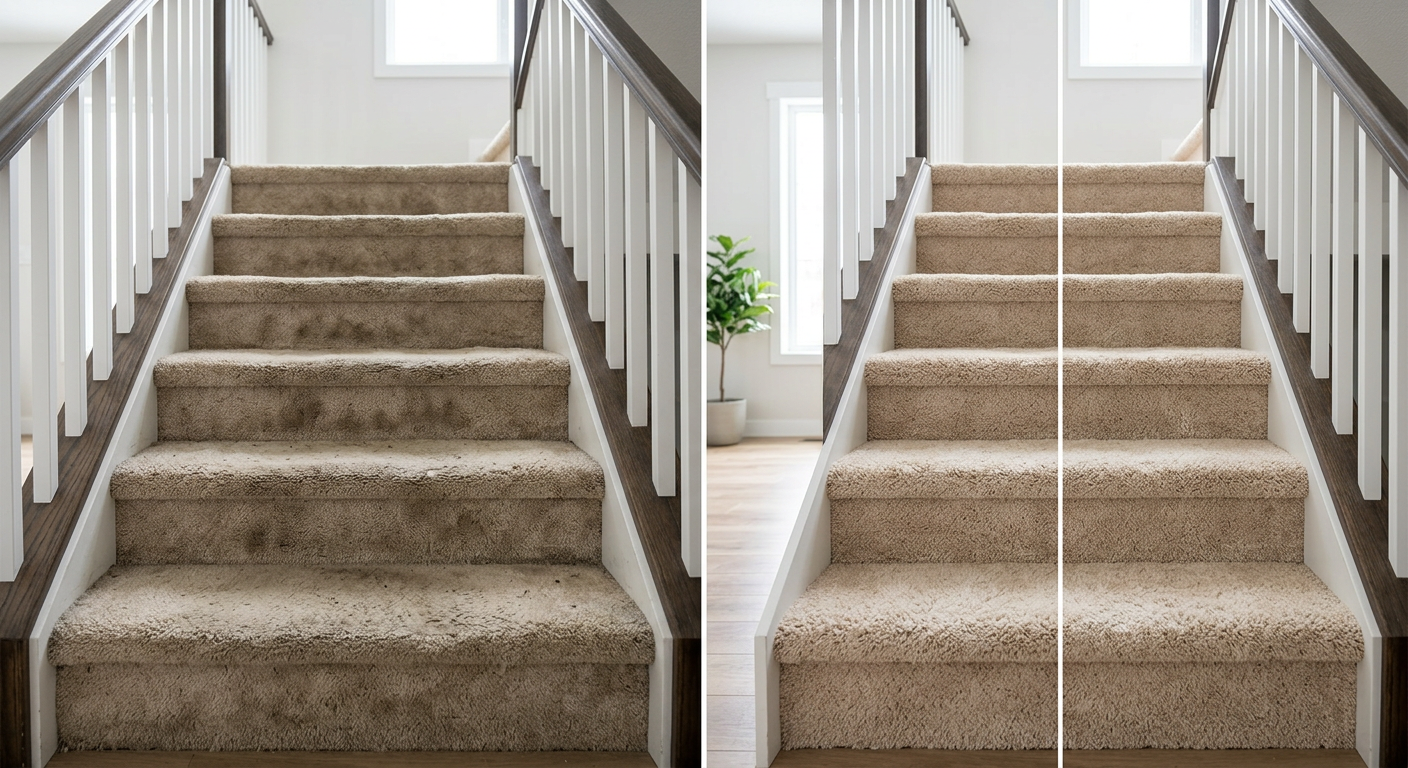
The frequency of cleaning depends heavily on household dynamics. The Institute of Inspection, Cleaning and Restoration Certification (IICRC) sets the global standards for textile care. Based on their 2026 guidelines, here is the recommended schedule for stair maintenance:
- Light Traffic (Single occupant, no pets): Professional cleaning every 18 months.
- Medium Traffic (Families with children): Professional cleaning every 12 months.
- Heavy Traffic (Families with multiple pets, indoor smoking, or frequent guests): Professional cleaning every 6 to 9 months.
Adhering to proper cleaning frequency not only keeps the home looking pristine but also fulfills the warranty requirements of most major carpet manufacturers, who stipulate professional hot water extraction every 12 to 18 months to keep the warranty valid.
Key Takeaways for Phoenix Homeowners
To ensure the longevity and hygiene of your home’s multi-level flooring, keep these critical points in mind:
- The bullnose of the stair takes the most abuse; keep it free of abrasive desert sand to prevent pile distortion.
- Avoid DIY rental machines on stairs due to the high risk of over-wetting, delamination, and mold growth.
- Professional hot water extraction is the only method capable of removing deeply embedded haboob dust and pet dander from the dense stair padding.
- Vacuum stairs weekly using a specialized crevice tool and a soft brush attachment, never a rotating beater bar.
- Schedule professional deep cleaning every 12 to 18 months to maintain indoor air quality and protect your carpet warranty.
Frequently Asked Questions (FAQ)
Why are my carpeted stairs getting dirty so much faster than my living room?
Stairs receive highly concentrated foot traffic in a very small surface area. Additionally, the pivoting motion of the foot on the stair’s edge grinds dirt deeper into the fibers than normal walking on a flat surface.
How long does it take for carpeted stairs to dry after professional cleaning?
When utilizing modern high-extraction equipment, stairs typically dry within 4 to 6 hours. Proper ventilation and the use of ceiling fans or air movers can accelerate this process significantly. You can read more about how long carpet cleaning take to dry in our detailed guide.
Is it worth paying extra for carpet protector on stairs?
Yes. Because stairs endure severe mechanical wear, applying a fluorochemical carpet protector after cleaning helps create a barrier against oily soils and liquid spills, making your routine vacuuming much more effective.
Can professional cleaning fix flattened or matted carpet on my stairs?
Professional hot water extraction can significantly improve the appearance of matted carpet by removing the sticky soils holding the fibers down and using heat to reset the yarn’s “memory.” However, if permanent pile distortion has occurred, the texture change is irreversible.
What is the best way to handle carpet cleaning stairs Phoenix residents need during monsoon season?
During the dusty monsoon season, increase your vacuuming frequency to twice a week using a HEPA-filtered vacuum. Schedule your professional deep cleaning for late fall, after the dust storms have subsided, to remove the accumulated particulate matter.
Conclusion: Elevate Your Stairway Maintenance
Your staircase is the central artery of your home, taking the absolute brunt of Phoenix’s harsh desert dust, pet dander, and concentrated daily foot traffic. Relying on standard upright vacuuming or risky DIY rental machines often leads to permanent pile distortion, sticky detergent residues, and hidden allergens trapped deep within the padding. To truly protect your investment and maintain a healthy indoor environment, professional Residential Carpet Cleaning Phoenix services are not just an option—they’re a necessity. By entrusting your stairs to the experts, you can eliminate abrasive soils from the vulnerable bullnose, restore the carpet’s original beauty, and extend the lifespan of your high-traffic flooring for years to come.
Schedule Your Free Assessment
Call us today! (602) 603-4781 to have our team evaluate your carpeted stairs. We’ll identify any embedded soils or wear patterns, recommend our professional hot water extraction solutions, and provide transparent pricing for any needed work.
Contact Barefoot Clean Floors today at (602) 603-4781. Keep your stairs clean, allergen-free, and your home looking its absolute best!
