

Phoenix businesses schedule regular carpet cleaning to combat abrasive desert dust, extend the lifespan of expensive commercial textiles, and maintain a professional, healthy environment for employees and clients. In an environment where fine particulate matter is constantly tracked indoors, vacuuming alone is insufficient. For facility managers and business owners, investing in professional commercial carpet cleaning in Phoenix is a strategic financial decision that directly impacts the bottom line, indoor air quality, and overall brand perception.
The Unique Climate Challenges for Phoenix Commercial Spaces
Operating a business in the Sonoran Desert presents unique facility maintenance challenges. The environment is characterized by extreme heat, low humidity, and an abundance of fine silica dust. During the annual monsoon season, haboobs (intense dust storms) force massive amounts of particulate matter into commercial HVAC systems and through entryways. Once inside, this dust settles into the base of commercial carpet fibers.
According to the Environmental Protection Agency (EPA), indoor air can be two to five times more polluted than outdoor air, a statistic that is exacerbated in desert climates. The silica dust found in Phoenix is highly abrasive. When employees and customers walk across dirty carpets, these microscopic particles act like tiny razor blades, physically shearing and scratching the synthetic fibers (typically nylon or olefin). This process, known as aesthetic degradation, causes carpets to look dull and worn out long before their structural integrity fails.
Research from the Building Owners and Managers Association (BOMA) in 2026 indicates that commercial spaces in the Southwest experience a 40% higher rate of soil accumulation compared to the national average. This rapid soil loading is exactly why proactive facility managers prioritize regular textile maintenance to extend carpet life and protect their capital investments.
How Regular Maintenance Impacts the Bottom Line
Replacing commercial carpeting is a massive capital expenditure. Beyond the cost of the materials and installation, businesses must factor in the cost of downtime, moving furniture, and lost productivity. Regular commercial carpet cleaning Phoenix services cost a fraction of replacement and can extend the life of commercial flooring by 5 to 10 years.
Consider the financial breakdown for a standard 10,000-square-foot office space over a five-year period in 2026:
| Expense Category | Reactive Approach (Replace Every 5 Years) | Proactive Approach (Regular Maintenance) |
|---|---|---|
| Carpet Material & Installation | $45,000 – $60,000 | $0 (Lifespan extended to 10-15 years) |
| Quarterly Deep Cleaning | $0 (Ignored) | $8,000 – $12,000 (Over 5 years) |
| Downtime & Labor Disruption | $15,000+ | $0 (Cleaned after hours) |
| Total 5-Year Cost | $60,000 – $75,000 | $8,000 – $12,000 |
As Dr. Aris Thorne, Director of the Southwest Facility Management Institute, explains: “Treating commercial flooring as a disposable asset is a relic of the past. In 2026, intelligent facility management dictates that routine extraction and encapsulation are essential preventative maintenance protocols that yield an ROI of over 400% when compared to premature replacement.”
Health, Productivity, and Employee Well-being
The health of a building’s occupants is directly tied to the cleanliness of its flooring. Commercial carpets act as massive environmental filters, trapping dust, pollen, Volatile Organic Compounds (VOCs), and biological contaminants. However, like any filter, once a carpet becomes saturated, it begins releasing these pollutants back into the breathing zone with every footstep.
This phenomenon significantly impacts employee health. The Centers for Disease Control and Prevention (CDC) highlights that poor indoor air quality contributes to increased respiratory issues, fatigue, and headaches among workers. By utilizing professional extraction methods, businesses can mitigate the risks associated with dirty carpets, leading to a healthier workforce.
A recent 2026 workplace health study found that offices implementing quarterly deep carpet cleaning saw a 22% reduction in employee sick days related to respiratory illnesses and allergies. Furthermore, clean environments boost morale. Employees are more productive and engaged when they work in a space that looks and smells fresh. If you are wondering if professional services help with Phoenix dust and allergens, the scientific consensus is a resounding yes.
The Science of Commercial Carpet Extraction
Commercial carpets are fundamentally different from residential plush carpets. They are typically low-pile, densely woven loop structures designed for heavy traffic. Therefore, the cleaning chemistry and mechanical action required to clean them must be specialized. The Institute of Inspection, Cleaning and Restoration Certification (IICRC) outlines strict standards for commercial textile maintenance.
Two primary methods dominate the industry in 2026:
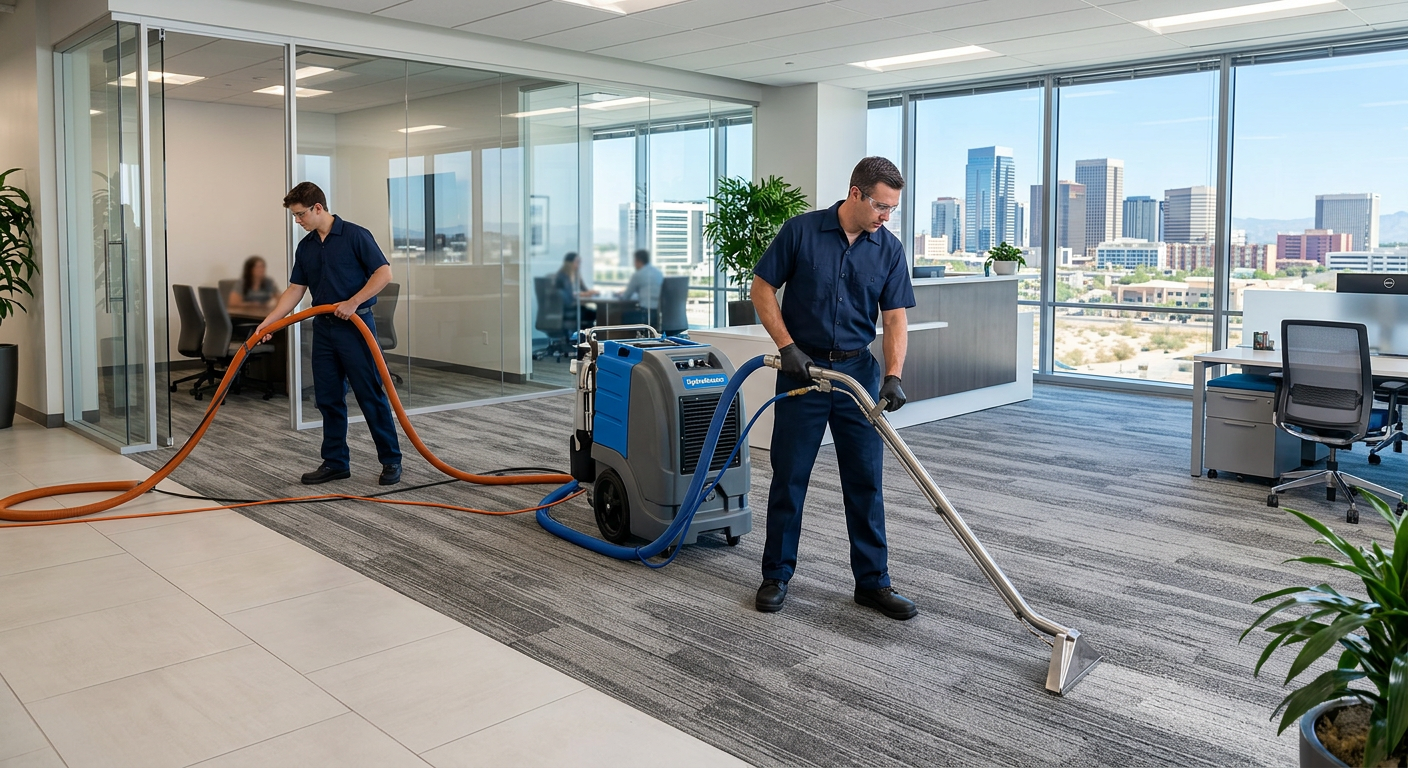
- Hot Water Extraction (HWE): Often referred to as steam cleaning, this method involves injecting pressurized, pH-balanced hot water and cleaning agents into the carpet pile, followed immediately by powerful vacuum extraction. HWE is the gold standard for restorative cleaning, removing deeply embedded soils and biological contaminants.
- Low-Moisture Encapsulation: This highly efficient interim cleaning method uses specialized polymers. The encapsulation chemical is agitated into the carpet, where it surrounds and crystallizes soil particles. Once dry, these crystals are simply vacuumed away. This method is praised for its rapid drying times and excellent appearance retention.
Choosing the right method depends on the facility’s specific needs, traffic patterns, and soil load. A reputable provider of commercial carpet cleaning Phoenix will assess the textiles and recommend a hybrid approach, utilizing encapsulation for monthly maintenance and HWE for annual or semi-annual restorative deep cleaning.
Step-by-Step: The Professional Commercial Carpet Cleaning Process
To achieve optimal results without damaging the textiles, professional technicians follow a rigorous, multi-step protocol. Skipping any of these steps can lead to rapid resoiling or permanent fiber damage.
- Pre-Inspection and Auditing: Technicians assess the carpet type, identify permanent stains, and map out high-traffic lanes. This step determines the appropriate chemistry and water pressure.
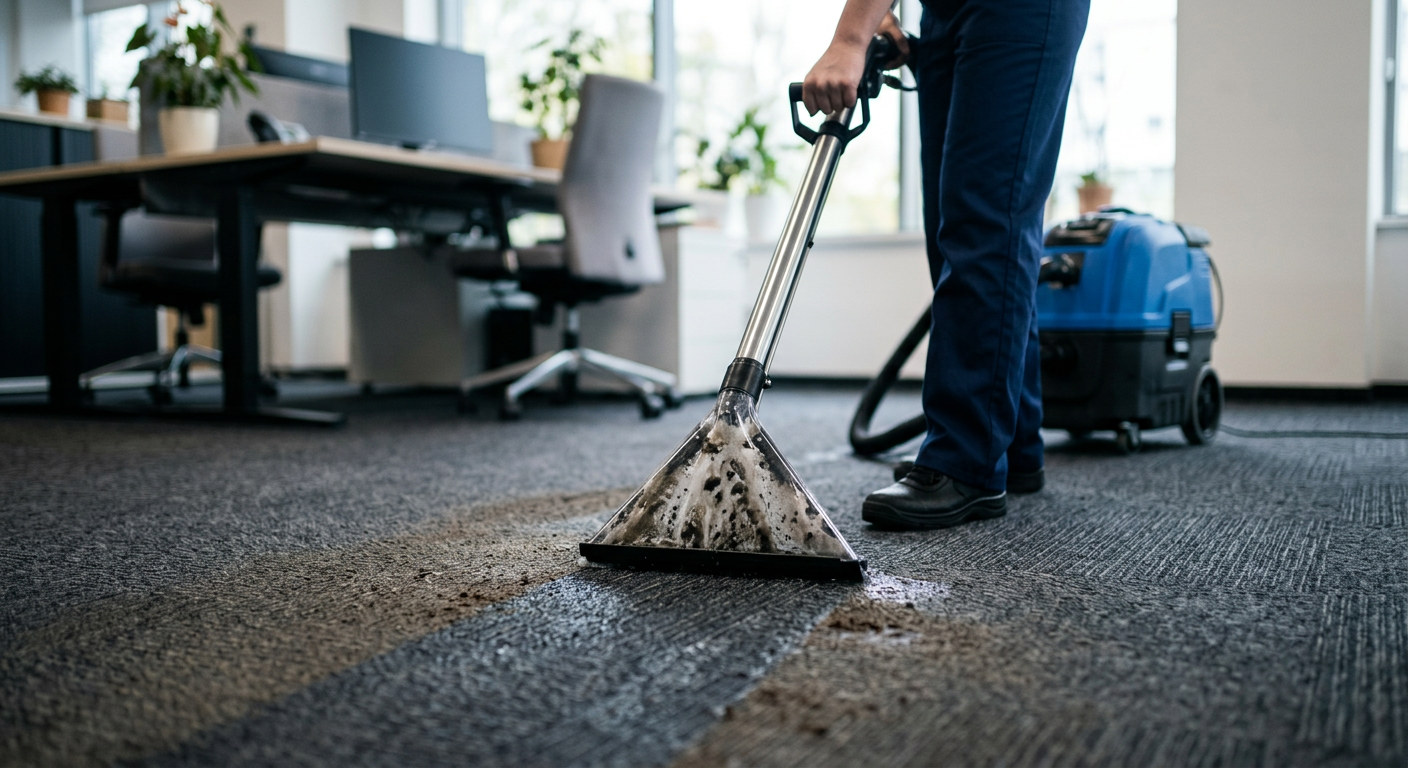
- Dry Soil Removal: Up to 79% of soil in commercial carpets is dry particulate matter. Industrial-grade HEPA vacuuming and pile lifting are performed to remove this abrasive dirt before any moisture is introduced.
- Pre-Conditioning: An eco-friendly, alkaline pre-spray is applied to break down oily binders, grease, and sticky residues tracked in from asphalt parking lots.
- Mechanical Agitation: Counter-rotating brush (CRB) machines work the pre-conditioner deep into the densely packed loops of the commercial carpet, lifting matted fibers.
- Hot Water Extraction: Truck-mounted or high-powered portable extractors flush the carpet with a neutralizing rinse. This restores the carpet to a neutral pH, ensuring no sticky residue is left behind.
- Post-Spot Treatment: Any stubborn stains (like coffee or printer ink) that survived the extraction process are treated with specialized spotting agents.
- Rapid Drying: High-velocity air movers are deployed. Facility managers often ask how long carpet cleaning takes to dry; with modern commercial equipment, carpets are typically dry and ready for foot traffic within 2 to 4 hours.
Common Mistakes Facility Managers Make
Attempting to handle commercial carpet maintenance in-house or hiring uncertified janitorial staff often leads to costly errors. One of the most frequent carpet cleaning mistakes to avoid is over-wetting. When commercial carpets are saturated with too much water, the moisture can penetrate the backing, leading to delamination (where the secondary backing separates from the primary backing) and creating a breeding ground for mold and mildew.
Another common error is the use of high-pH, soapy detergents without a proper neutralizing rinse. “When janitorial teams use cheap, high-sudsing chemicals, they inevitably leave a sticky residue behind,” notes Marcus Vance, a senior textile inspector. “This residue acts as a dirt magnet. The carpet might look clean for a week, but it will resoil twice as fast, leading to a frustrating cycle of aesthetic degradation.”
Case Study: A Downtown Phoenix Office Transformation
In early 2026, a prominent tech firm in downtown Phoenix noticed their 15,000-square-foot office was looking dingy, and employee complaints regarding indoor allergies were rising. The carpet, a high-end nylon modular tile, was only three years old but looked a decade old due to heavy foot traffic and inadequate daily vacuuming.
They contracted a certified commercial carpet cleaning Phoenix specialist. The technicians performed a restorative Hot Water Extraction, focusing heavily on the transitional zones near the elevators and breakrooms. The results were quantifiable: the Light Reflectance Value (LRV) of the carpet improved by 85%, restoring the original vibrant blue hue. Furthermore, post-cleaning air quality tests revealed a 60% drop in airborne particulate matter. The firm avoided a $70,000 replacement cost and established a quarterly maintenance program to preserve the restored textiles.
Frequency Guidelines for Different Business Types
How often should a Phoenix business clean its carpets? The answer depends entirely on the facility’s use case, foot traffic, and proximity to outdoor dirt sources. Establishing the best practices for cleaning frequency is essential for budget forecasting.
- Corporate Offices (Light to Medium Traffic): Vacuuming daily. Encapsulation cleaning every 3 to 6 months. Restorative hot water extraction annually.
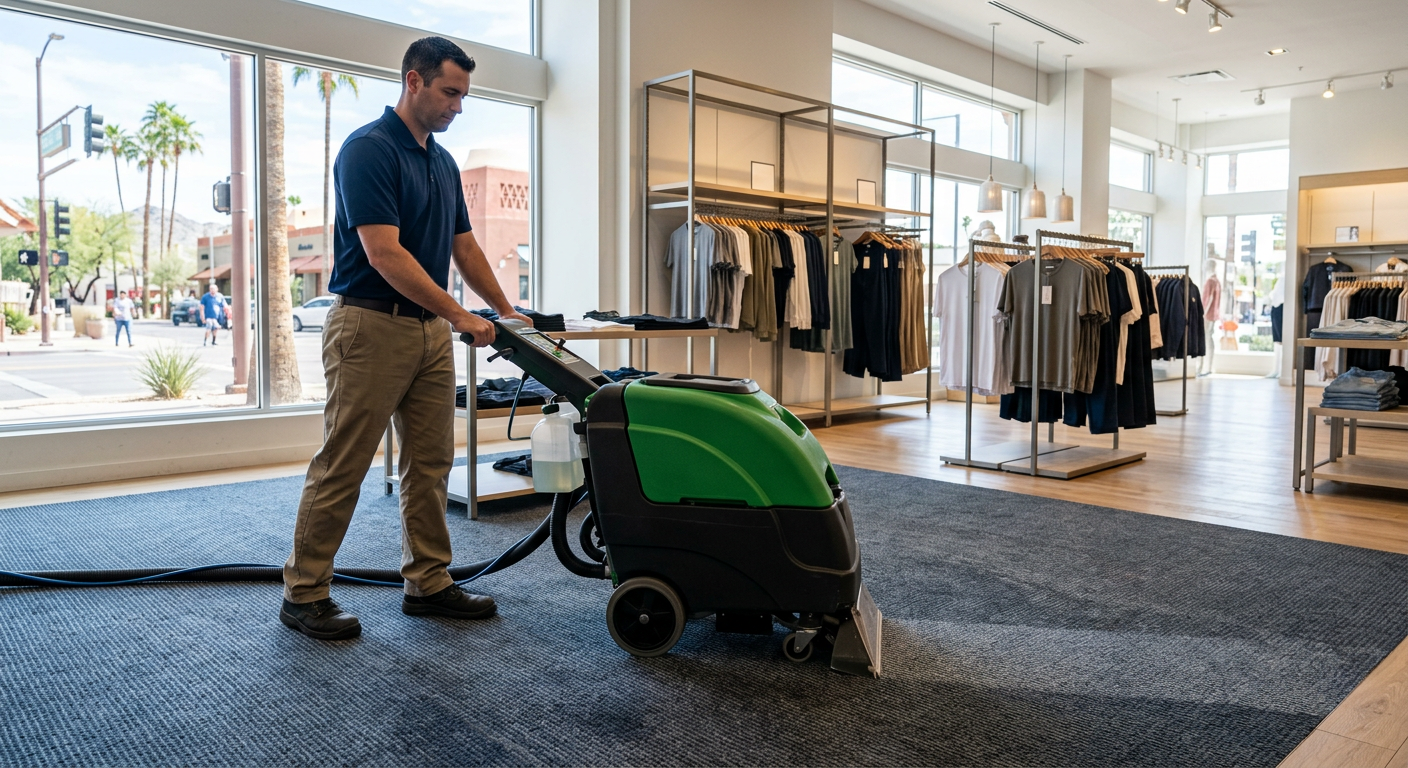
- Retail Stores (Heavy Traffic): Vacuuming daily. Encapsulation cleaning monthly. Restorative extraction every 3 to 4 months.
- Medical Facilities & Clinics: Due to strict hygiene requirements, these spaces require deep extraction every 1 to 3 months, utilizing EPA-registered sanitizers.
- Restaurants & Hospitality: High exposure to food spills and grease necessitates monthly deep cleaning, particularly in dining areas and transitional zones near kitchens.
Eco-Friendly and Low-Moisture Options in 2026
Sustainability is no longer a buzzword; it is a corporate mandate. In Arizona, water conservation is a critical issue. The Arizona Department of Water Resources continuously advocates for commercial water reduction strategies. Consequently, the commercial cleaning industry has adapted.
Modern eco-friendly carpet cleaning utilizes advanced, plant-based surfactants that are 100% biodegradable and free of harsh VOCs. Furthermore, low-moisture encapsulation technology uses up to 80% less water than traditional steam cleaning. This not only aligns with corporate ESG (Environmental, Social, and Governance) goals but also ensures that businesses can maintain pristine facilities without straining local water resources.
Key Takeaways for Phoenix Business Owners
Maintaining commercial flooring in a desert environment requires a proactive, science-based approach. Here are the core principles every facility manager should remember:
- Dust is Destructive: Phoenix’s silica dust physically cuts and destroys carpet fibers. Regular removal is mandatory to prevent premature wear.
- Maintenance is Cheaper than Replacement: A structured cleaning program costs a fraction of replacing commercial textiles and yields a massive ROI.
- Health Equals Productivity: Clean carpets act as effective filters, improving indoor air quality, reducing sick days, and boosting employee morale.
- Hire Certified Professionals: Avoid janitorial staff for deep extraction. Certified technicians understand the specific chemistry and mechanical action required for commercial textiles.
- Embrace Low-Moisture Tech: Utilize encapsulation for interim maintenance to save water, reduce drying times, and prevent disruption to business operations.
By prioritizing commercial carpet cleaning Phoenix services, businesses protect their assets, their employees, and their professional image in an increasingly competitive marketplace.
Frequently Asked Questions (FAQ)
How much does commercial carpet cleaning cost in Phoenix?
In 2026, commercial carpet cleaning in Phoenix typically ranges from $0.15 to $0.30 per square foot, depending on the method used and the total square footage. Restorative hot water extraction generally costs more than interim encapsulation cleaning due to the labor and equipment involved.
Can professional cleaning remove coffee and toner stains from office carpets?
Yes, certified technicians use specialized spotting agents and pH-altering chemistry to break down complex stains like coffee, printer toner, and grease. However, the success rate depends on how long the stain has been sitting and whether improper over-the-counter chemicals were previously applied.
Will carpet cleaning disrupt my business operations?
No, professional commercial carpet cleaners typically offer flexible scheduling, including evening and weekend services. Furthermore, modern low-moisture encapsulation methods dry in under an hour, ensuring zero downtime for your staff and customers.
Why does my commercial carpet look dirty again so quickly after cleaning?
Rapid resoiling is usually caused by uncertified cleaners leaving a sticky detergent residue in the carpet fibers. This residue attracts and holds onto new dirt; hiring a professional who uses a neutralizing rinse eliminates this problem entirely.
Is hot water extraction better than encapsulation?
Neither is objectively “better”; they serve different purposes. Hot water extraction is necessary for deep, restorative cleaning to remove embedded soils and biological contaminants, while encapsulation is highly efficient for frequent, low-moisture appearance maintenance.
How do I know if my office carpet needs to be replaced rather than cleaned?
If the carpet exhibits severe delamination (backing separation), widespread permanent fiber damage (crushing that cannot be lifted), or extensive mold growth, replacement is necessary. A certified textile inspector can evaluate your flooring to determine if restorative cleaning can save it.
Conclusion: A Smart Investment for Your Bottom Line
Managing a commercial space in the Phoenix desert means fighting a constant battle against abrasive silica dust and heavy foot traffic. Treating your office carpeting as a disposable asset is a costly mistake that disrupts your daily operations and drains your maintenance budget. By implementing a proactive, professional floor care plan, you can stop the cycle of premature wear, significantly improve your building’s indoor air quality, and boost employee productivity. Regular Commercial Carpet Cleaning Phoenix isn’t just a routine facility chore—it is a strategic financial decision that protects your capital investment and ensures your business always presents a pristine, professional image to every client who walks through your doors.
Schedule Your Free Assessment
Call us today! (602) 603-4781 to have our team evaluate your commercial carpets. We’ll identify any high-traffic wear, embedded desert dust, or stubborn stains, recommend our specialized extraction or encapsulation solutions, and provide transparent pricing for any needed work.
Contact Barefoot Clean Floors today at (602) 603-4781. Keep your office environment healthy, extend the life of your commercial flooring, and ensure your business looks its absolute best!
