


Light carpet cleaning tips Phoenix homeowners use year-round focus on prevention, consistent vacuuming, and careful spot treatment. Beige, ivory, and light gray carpet brightens rooms but reveals dust, desert grit, and foot traffic sooner than darker shades. The goal is not to eliminate every trace of use—it is to keep fibers looking evenly clean between professional visits.
These DIY steps support—not replace—periodic hot-water extraction. When deeper cleaning is due, Barefoot Clean Floors provides Steam Carpet Cleaning Phoenix with eco-friendly, non-toxic solutions for residential and commercial clients.
Key Takeaways
- Light carpet shows soil early; frequent dry soil removal is the most effective daily habit.
- Entry mats, shoe management, and quick spill response reduce visible staining on pale fibers.
- Blot—do not rub—when treating spots; use manufacturer-approved products when possible.
- Phoenix dust and fine grit act like abrasives; vacuum traffic lanes at least weekly in active homes.
- Schedule professional cleaning before traffic lanes look permanently gray or matted.
Why Light Carpet Shows Soil Faster
Light fibers reflect more ambient light, which makes shadowing from embedded particles easier to see. In Phoenix, fine desert dust can settle uniformly yet still read as dinginess on ivory or light gray pile. Oils from skin, pets, and food create slightly darker patches that stand out against a pale background.
This visibility is normal—not necessarily a sign of poor carpet quality. Adjusting maintenance frequency often matters more than switching to a darker color after installation.
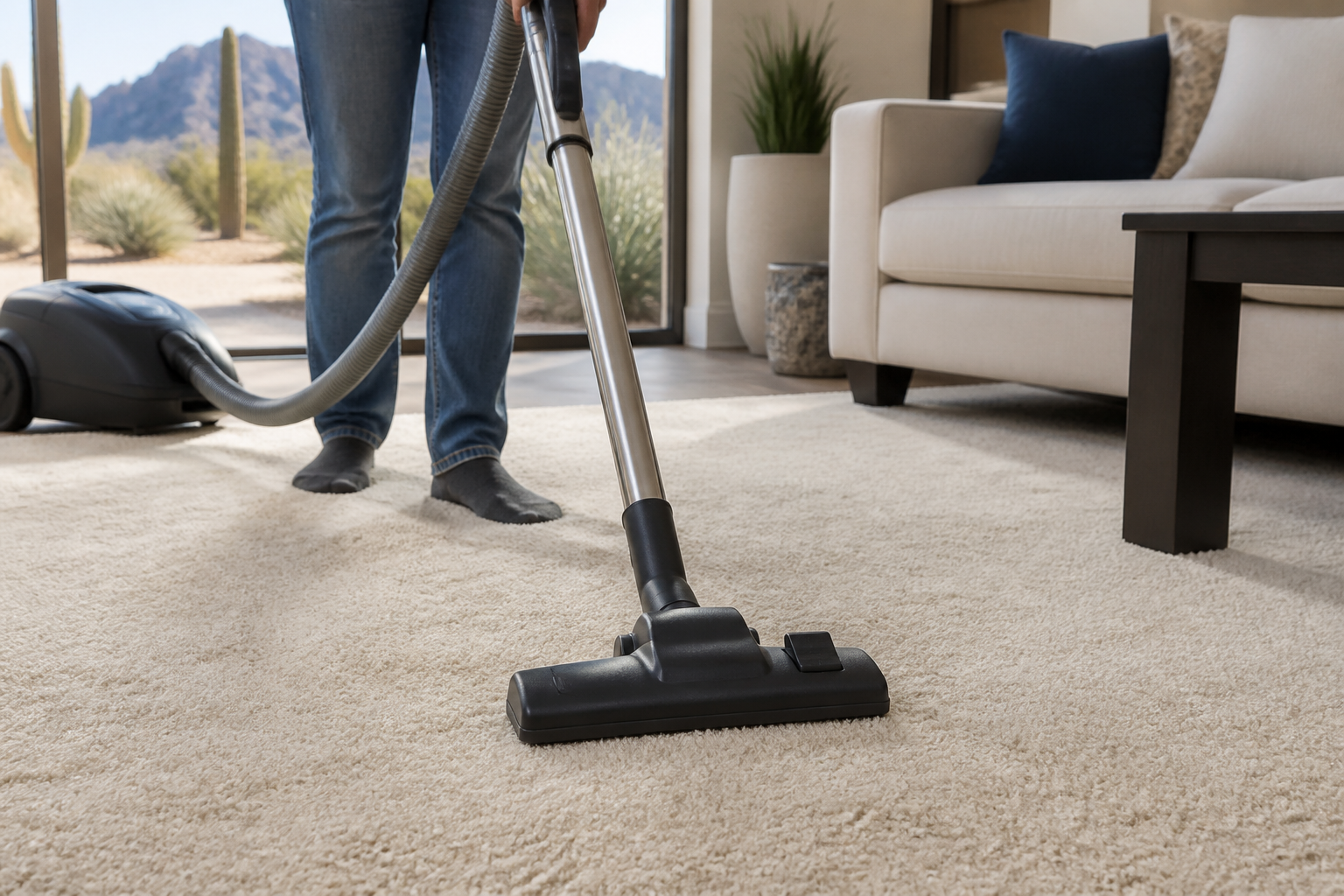
Vacuuming Habits That Make a Visible Difference
The Carpet and Rug Institute recommends regular vacuuming with equipment appropriate for your carpet type to remove dry soil before it filters deep into the pile. For light carpet in active households:
- Vacuum high-traffic paths two to three times per week when possible.
- Use slow, overlapping passes rather than a quick single sweep.
- Empty or replace bags and clean filters so suction stays strong.
- Attach crevice tools to edges where dust lines form against baseboards.
On stairs and hallways, vacuum both the center and edges where grit collects. If your vacuum has height adjustment, set it for your pile type to avoid fuzzing or skipping.
Entry Protection and Shoe Habits
Most soil enters on feet and paws. A sturdy outdoor mat plus an indoor mat at main doors catches abrasive particles before they reach light carpet. Shake or vacuum mats weekly. Some households adopt a shoes-off policy in carpeted areas; others keep indoor-only slippers near entries.
Garage and patio doors deserve equal attention—desert grit and landscape material often track in from side entries. For how local soil behaves in fibers, see How to remove Arizona desert dirt from carpet fibers.
Spot and Spill Response on Pale Fibers
Speed matters on light carpet. Blot liquids with a clean white cloth or paper towel. Replace towels as they absorb color. Work from the outside of a spot inward to avoid spreading. Avoid colored rags that might transfer dye.
Use spotting products recommended by your carpet manufacturer when you have them. Test any new product in an inconspicuous area first. Rinse with water and blot dry after treatment when instructions call for it. Do not overwet carpet; excess moisture can wick soil to the surface or affect backing.
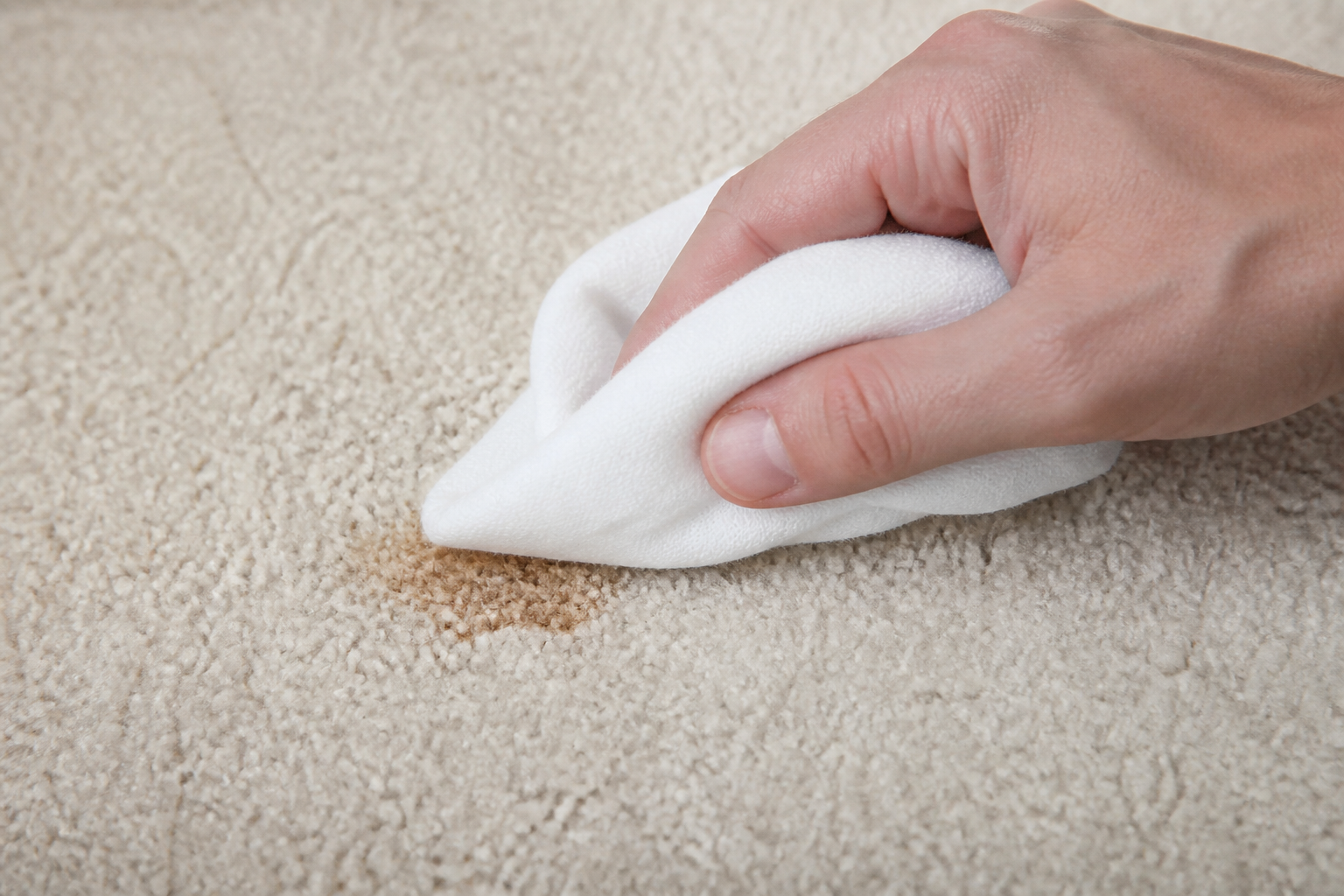
Common Household Spills and Safer Responses
- Water-based drinks: Blot, rinse lightly with water, blot again.
- Mud: Let dry completely, vacuum solids, then treat remaining mark gently.
- Food: Lift solids with a spoon; blot liquids; follow label directions on approved spotters.
- Pet accidents: Blot urine; use an enzymatic cleaner suited to carpet when appropriate; avoid ammonia-based products that may encourage repeat marking.
Pet owners can combine these steps with guidance from How carpet cleaning helps Phoenix families with pets.
Limiting Sun Fading and Uneven Wear
Strong Phoenix sun through windows can contribute to gradual color change on some carpets and rugs. Close blinds or use sheer curtains during peak hours if fading appears uneven. Rotate movable area rugs every few months so traffic and light exposure balance over time.
Move small furniture occasionally to prevent permanent indentations on light pile. Lift furniture when moving it; dragging legs can abrade pale fibers along a visible line.
DIY Methods to Use With Caution
Internet advice often suggests vinegar, dish soap, or heavy scrubbing for every stain. Mild solutions may help on some fibers when rinsed and blotted properly, but the wrong chemistry can leave residue that attracts new soil—especially visible on light carpet. Avoid bleach unless a professional directs you to a fiber-safe approach. Skip aggressive brushing that untwists pile.
When a spot reappears after drying (wicking), repeated surface scrubbing may not reach the source. That is often a sign to schedule professional extraction.
When DIY Maintenance Is Not Enough
Traffic lanes that stay gray after thorough vacuuming usually hold embedded soil professional equipment is designed to extract. Allergy-sensitive households may also benefit from deeper cleaning discussed in Does carpet cleaning help with Phoenix dust and allergens?
Plan professional service before hosting events or after seasonal pollen peaks if light carpet looks uniformly dull. Common booking questions appear in Top 5 carpet cleaning questions Phoenix homeowners ask.
Simple Weekly Routine for Light Carpet
- Vacuum entries, halls, and main living paths.
- Shake or vacuum door mats.
- Spot-check for new stains; blot anything fresh.
- Quick pass under dining chairs and coffee tables where crumbs collect.
Monthly, add edges, stairs, and guest bedrooms. Quarterly or semi-annual professional cleaning supports the routine in most Phoenix homes, with frequency adjusted for pets, children, and traffic.
Working With a Professional Cleaner
Tell your provider you have light-colored carpet and note any prior spot treatments. Eco-friendly, non-toxic cleaning can effectively refresh pale fibers when performed with appropriate pre-spray and extraction. Barefoot Clean Floors also handles tile and furniture cleaning for whole-home refresh. Learn more at Barefoot Clean Floors.
Room-by-Room Priorities for Pale Carpet
Not every space needs identical attention. In open living areas, focus on paths between kitchen openings and seating—food crumbs and cooking oils migrate quickly onto light pile. In bedrooms, body oils and sock lint can gray paths near the bed and closet. Home offices see chair caster wear in a small radius that reads as a dark halo on ivory carpet.
Coordinate furniture placement before vacuuming so you cover the full footprint at least once each week. Under sofa fronts and media consoles, soil accumulates slowly but shows sharply on light fibers when you finally move pieces for cleaning day.
Seasonal Adjustments in the Phoenix Valley
Monsoon season can increase tracked-in mud and moisture at entries; keep extra towels and a dedicated blotting kit near doors. Spring pollen may settle on carpet along with dust; vacuuming filters more often during heavy pollen weeks can help. Summer pool use introduces wet feet and occasional sunscreen transfer—address entry paths promptly before oils spread across pale traffic lanes.
Tools Worth Keeping on Hand
A clean white microfiber cloth, a gentle manufacturer-approved spotter, a spoon for lifting solids, and a vacuum with a functioning filter cover most everyday needs on light carpet. Store them together so family members reach for blotting instead of rubbing with paper towels that shred or colored cloths that might bleed. A small handheld extractor can help with pet accidents when used sparingly and according to label directions, but overwetting pale carpet often creates visible rings as spots dry.
Frequently Asked Questions
How often should I vacuum light carpet in Phoenix?
Vacuum high-traffic areas at least weekly in most homes; two to three times per week is reasonable when dust is visible or pets share the space. Adjust based on how quickly paths reappear after vacuuming.
Can I use baking soda on light carpet?
Some homeowners lightly apply baking soda before vacuuming to address odor. If you try it, vacuum thoroughly so residue does not remain to attract soil. Follow manufacturer guidance and test in a hidden area first.
Why do stains look bigger after I clean them myself?
Overwetting can wick soil from backing to tips as carpet dries, leaving a larger visible ring on light fibers. Blot conservatively and call a professional if a spot spreads or returns.
Are protectants necessary on light carpet?
Some carpets ship with factory treatments; others offer optional protectants. Treatments can help with spill response but do not replace vacuuming or professional cleaning. Ask your installer or cleaner what applies to your product.
When should I stop DIY and schedule steam cleaning?
Schedule service when traffic lanes stay dull after vacuuming, odors persist, multiple spots remain visible, or it has been more than a year since the last professional cleaning in a busy household.
Conclusion
Light carpet cleaning tips Phoenix residents rely on come down to frequent dry soil removal, smart entry habits, gentle spotting, and timely professional extraction. Light carpet will always show use sooner than dark carpet, but consistent care keeps rooms looking bright and welcoming. For eco-friendly help with stubborn soil or whole-home refresh, contact Barefoot Clean Floors at (602) 603-4781.
References
- Carpet and Rug Institute (CRI) — vacuuming frequency and carpet care basics.
- U.S. Environmental Protection Agency — indoor air quality and household cleaning product considerations.
