
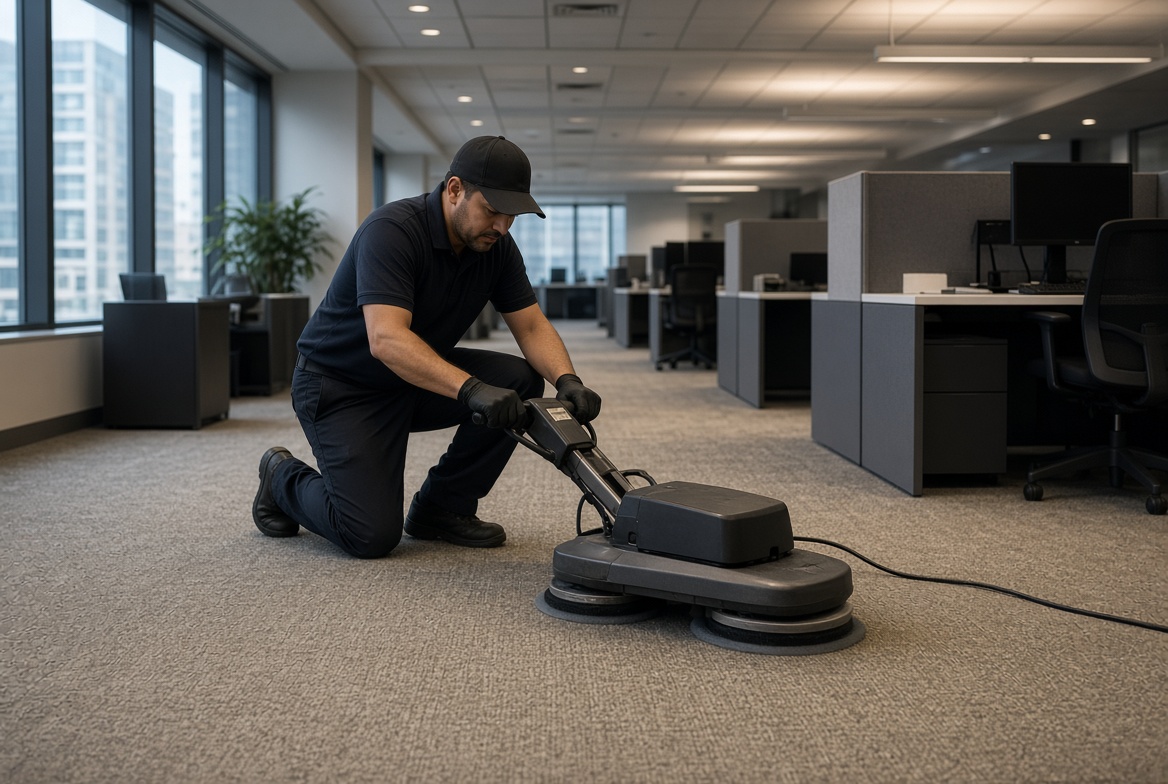

Encapsulation carpet cleaning is a very low-moisture method that uses a polymer solution to surround dirt in the carpet, dry it into brittle crystals, and let routine vacuuming remove it. Because the carpet is never saturated, it is usually ready to walk on within a few hours, which is why offices, call centers and retail spaces use it to clean overnight without closing areas off.
It is not the right answer for every carpet, though. This guide explains how encapsulation works, how it compares with hot water extraction, where each method fits in a commercial building, and what a good maintenance program looks like. If you manage a facility in the Valley, our commercial floor cleaning service can walk the building with you and recommend the right mix.
How Encapsulation Carpet Cleaning Works
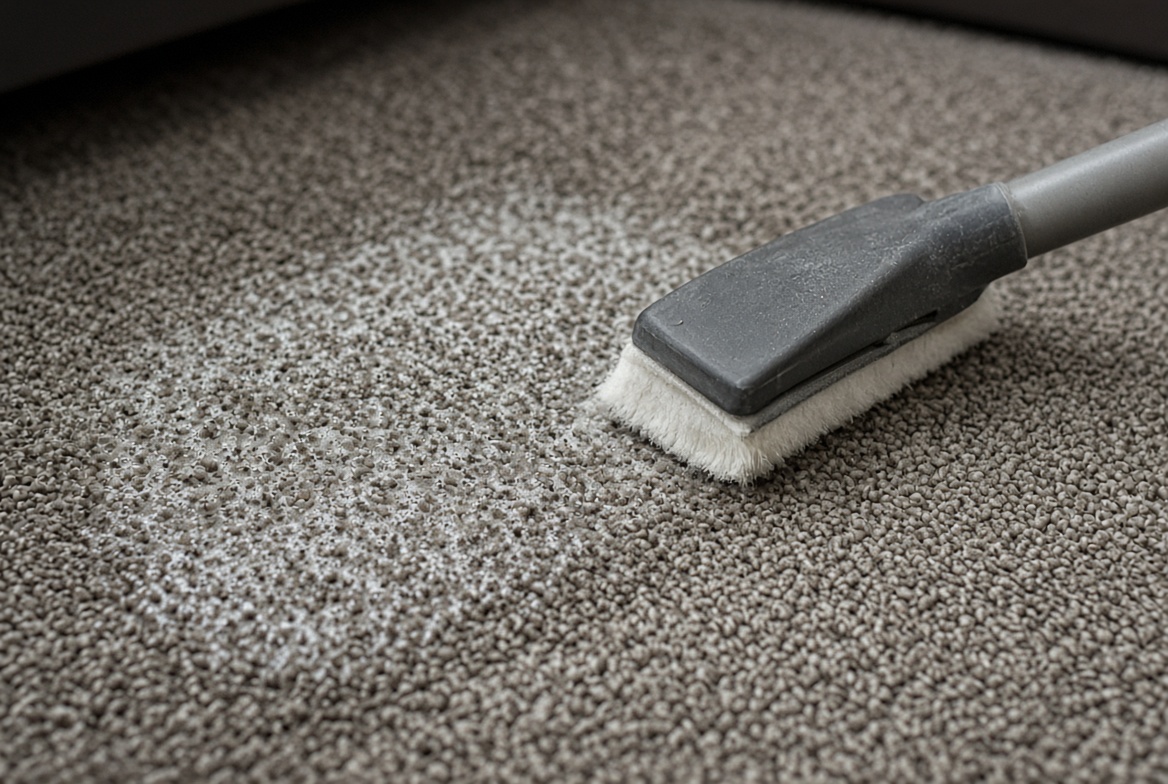
The chemistry is simple. A cleaning solution containing specialized polymers is applied to the carpet and worked into the pile. It dissolves the oils and binding soils that hold dirt to each fiber. As it dries, the polymer forms tiny brittle crystals around the loosened dirt. Those crystals detach from the fiber, and the next vacuuming carries them away.
The important detail is what is not left behind. Some wet methods can leave a soapy residue that attracts new soil, which is why some carpets look dirty again soon after cleaning. With encapsulation, there is no sticky detergent left in the pile, so the carpet resists re-soiling and the time between professional cleanings can stretch.
The Process on a Commercial Floor
On a typical job our team follows the same sequence used on our low-moisture commercial carpet cleaning in Phoenix:
- Inspection and planning. We identify broadloom or modular carpet tiles, find the heaviest traffic and mark specific spots such as coffee, ink, rust or grease.
- Dry soil removal. High-filtration commercial vacuums lift loose sand and dust before anything wet is applied, which prevents muddy streaks.
- Targeted spotting. Non-toxic pre-treatment goes on traffic lanes and individual stains to break down oils.
- Agitation. Counter-rotating brush machines, or rotary units with soft pads, work the encapsulation solution into the pile and lift crushed fibers.
- Grooming. The carpet is groomed for a uniform look and quicker evaporation.
Encapsulation vs. Hot Water Extraction
Both methods belong in a building’s maintenance plan. They do different jobs:
- Drying and downtime. Encapsulation carpet is typically ready within a few hours, so work can happen after hours and the floor reopens for the next workday. Extraction puts more water into the carpet, so areas may need to stay closed longer.
- Water use. Very low-moisture cleaning uses a small fraction of the water, which matters in the desert and in buildings that stay sealed with air conditioning.
- Depth. Hot water extraction flushes soil, allergens and residue out of the fibers and backing. It is the stronger choice for heavy spills, deeply embedded soil and carpets that have gone a long time without care.
- Wicking. Because encapsulation does not saturate the pad, stains are far less likely to resurface as the carpet dries.
- Residue. Encapsulation crystals are vacuumed away. With extraction, a thorough rinse is what keeps residue out.
We perform both. Our carpet cleaning services page explains hot water extraction for situations where it is the better fit.
Where Encapsulation Fits Best
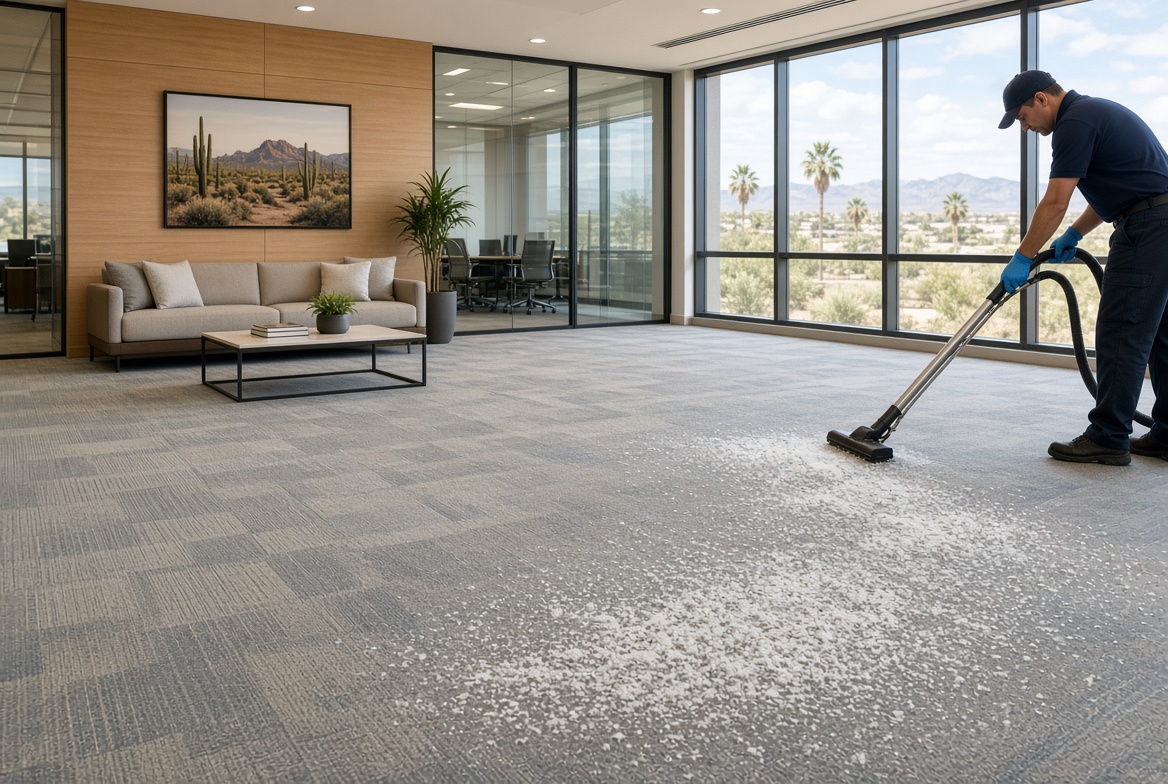
Encapsulation is a strong match for:
- Offices and call centers that cannot close sections of the floor during the day.
- Commercial carpet tile, where controlling moisture protects the backing and adhesives.
- Frequent maintenance cleaning of entries, corridors and break-room approaches between deeper cleanings.
- Retail spaces that need floors ready before doors open.
- Multi-floor buildings where work is split into zones over several nights.
It is less suited to carpet that is heavily soiled or contaminated by a large spill or pet accident. Those areas need extraction to rinse material out of the backing. Many programs combine the two: frequent encapsulation for appearance and traffic lanes, with periodic extraction where it is needed.
Building a Maintenance Program Around Low-Moisture Cleaning
Reactive cleaning, waiting until traffic lanes turn gray, costs more over the life of the carpet. Abrasive soil grinds fibers every time someone walks over it, and once the fibers are damaged no cleaning method brings them back. A planned program sets a rhythm based on foot traffic: more frequent attention for entries, corridors and break rooms, less for private offices.
In practice, that means:
- Zones and schedules. Common areas and elevator lobbies can be done one night, work areas another, so the building never has to empty out. Evenings, weekends and early mornings are all available.
- Clear communication. Your facility manager knows which areas will be worked on, and when, before we start.
- Daily vacuuming. Encapsulation depends on vacuuming to remove the crystals, so a good in-house vacuuming routine is part of the result.
- Entry matting. Desert dust and the oily residue from summer parking lots are tracked in at the door. Good mats catch them before they spread.
For more on why regular scheduling pays off, see our post on why Phoenix businesses schedule carpet cleaning regularly.
What Makes Phoenix Commercial Carpet Different
Valley buildings face a specific set of conditions. Haboobs push fine dust into HVAC systems and onto carpet, where it acts like sandpaper on the fibers. In summer, softened asphalt in parking lots leaves an oily film on shoes that shows up as dark lanes inside. Buildings stay closed and air-conditioned for much of the year, so adding a large amount of water during cleaning is a real concern. Low-moisture cleaning addresses all three: it removes oily soil, leaves little moisture behind, and fits around business hours.
Frequently Asked Questions
How long does encapsulation carpet cleaning take to dry?
Low-moisture carpet is typically ready within a few hours. Airflow and humidity in the building affect the exact time, and we plan zones so areas are ready for the next workday.
Is encapsulation as effective as steam cleaning?
They do different jobs. Encapsulation is excellent for routine maintenance and appearance with minimal downtime. Hot water extraction is the better choice for deep soil, heavy spills and neglected carpet. Many commercial programs use both.
Do I need to vacuum after encapsulation cleaning?
Yes. The dried crystals holding the dirt are removed by vacuuming, so routine vacuuming after the cleaning is part of how the method works.
Are the products safe for employees and visitors?
Our products are eco-friendly, non-toxic and biodegradable, safe for employees, visitors and pets.
Can you clean cubicle walls and lobby furniture at the same time?
Yes. Fabric partitions and lobby furniture trap dust and odors too, and we clean them with low-moisture upholstery tools. Tile entries and break-room grout can be included as well.
Plan Your Building’s Next Cleaning
Barefoot Clean Floors cleans offices, retail spaces and property-managed buildings across Phoenix, Tempe, Scottsdale and the East Valley, with after-hours scheduling so work is not interrupted. Call (602) 603-4781 or request a free quote. We will tour the building, suggest a zone-by-zone plan and give you a transparent estimate with no hidden fees.
References
- Carpet and Rug Institute: commercial carpet maintenance guidance.
